|
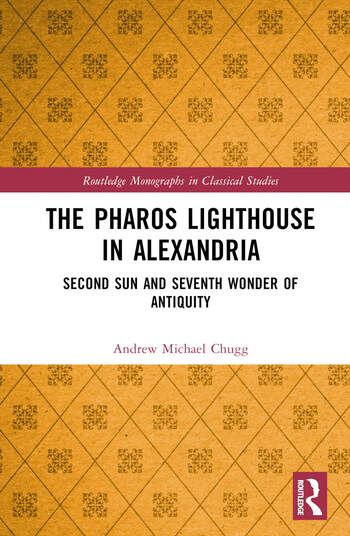
April 2024 – The Pharos lighthouse in Alexandria now published
by Routledge |
|
There was a Press Release entitled
The Tomb of Alexander the Great & the Graves
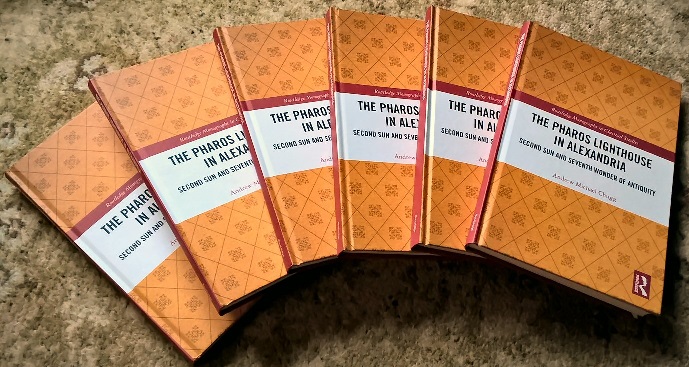
Andrew Chugg’s new book on “The Pharos Lighthouse in Alexandria: Second
Sun & Seventh Wonder of Antiquity” has now been published and is
available to order from the publisher Routledge’s website or elsewhere
including Amazon. The top-quality hardback is printed to a high standard
on premium paper stock for durability in libraries. However, the book
can also be read more cheaply by buying the eBook on Amazon or still
more cheaply by hiring the eBook for a six month period via the
publisher’s website. See:
https://www.routledge.com/The-Pharos-Lighthouse-In-Alexandria-Second-Sun-and-Seventh-Wonder-of-Antiquity/Chugg/p/book/9781032569369
|
(click photo to view in large) |
|
|
|
March 2024 – Filming the Sarcophagus of Alexander the Great in the
British Museum |
|
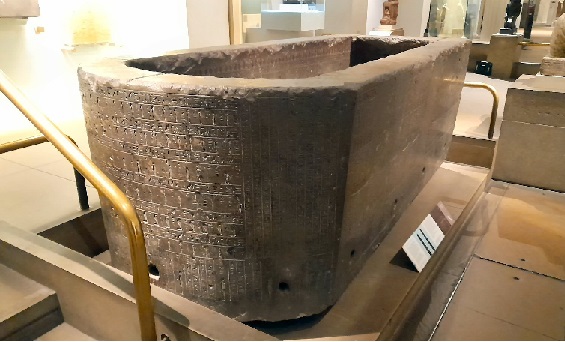
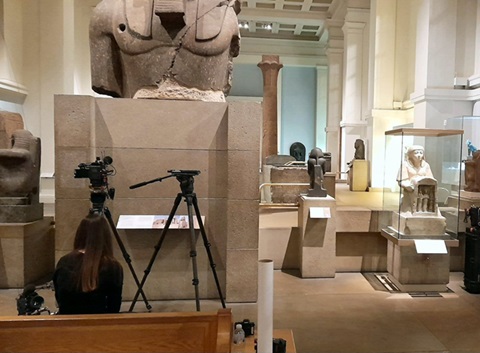
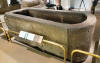
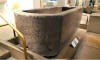
Andrew Chugg spent the evening of Saturday 16th March 2024
right up to midnight filming after hours in an almost deserted British
Museum with a film crew and presenter for an exciting forthcoming TV
documentary featuring the sarcophagus made for Nectanebo II, but used
instead to entomb the mummified corpse of Alexander the Great. For an
account of the history of this sarcophagus you can download and read
Andrew Chugg’s paper published in the classics journal Greece & Rome
here:
https://www.academia.edu/6809258/The_Sarcophagus_of_Alexander_the_Great
|
(click photo to view in large) |
|
|
|
March 2024 – Forthcoming book on the Pharos lighthouse in Alexandria |
|
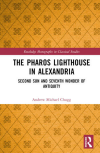
A new book on “The Pharos Lighthouse in Alexandria: Second Sun &
Seventh Wonder of Antiquity” by Andrew Michael Chugg will be
published by Routledge on 12th March 2024. This comprehensive
and insightful book brings scientific rigor to the problems of
reconstructing the Pharos Lighthouse, one of the Seven Wonders of the
Ancient World, and understanding how it functioned as the archetypal
lighthouse in antiquity, when it was described as a “second Sun”.
Conceived by Alexander the Great and designed by Sostratus, the Pharos
lighthouse stood as an iconic landmark of Alexandria for sixteen
centuries until felled by a calamitous earthquake in the fourteenth
century. The study of this great lighthouse has been neglected relative
to other ancient Wonders such as the Great Pyramid of Giza. This book
reconstructs the tower, its lustrous light, stunning statues and
astounding story in diligent detail through archaeological evidence and
surviving antique texts and images, providing a fresh evaluation of the
Pharos, its history, and its legacy. The Roman writer Achilles Tatius
termed the Pharos a “second Sun”; this expression is explained and
explored here for the first time, and has dramatic implications for the
nature of the Pharos’ light. The volume also explores how the creation
of the Pharos was a key stimulus for Alexandrian science and astronomy
in antiquity. See:
https://www.routledge.com/The-Pharos-Lighthouse-In-Alexandria-Second-Sun-and-Seventh-Wonder-of-Antiquity/Chugg/p/book/9781032569369
|
 |
|
|
|
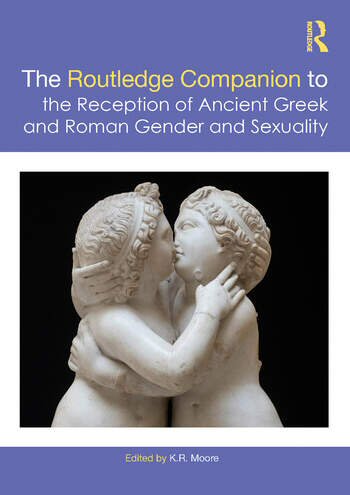
2022 – The Routledge Companion to the Reception of Ancient Greek and
Roman Gender and Sexuality, edited by K.R.Moore |
|
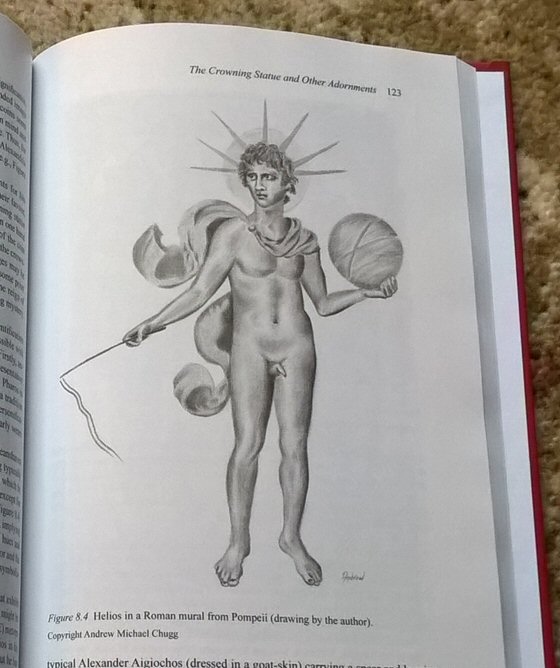
Andrew Chugg has authored two of the chapters in this volume.
Chaper 9 - Ancient and Modern Receptions of Eunuchs with a Focus on
Alexander’s Bagoas
A discussion of the roles and importance of eunuchs employed by monarchs
since the dawn of history with a special focus on Bagoas, the Royal
Eunuch of the Persian king Darius III and his adoption into the
administration of Alexander the Great. Bagoas is revealed as a prototype
for the royal eunuchs of later Greek and Roman monarchs. His importance
to Alexander's administration is shown through his influence in the
Persianisation of the regime as well as in his role as one of
Alexander's lovers. Possible references to the continuation of his
career under Seleucus and Antiochus are explored for the first time.
Chapter 27 - Graeco-Roman Worship of the Beloved: The Ancient and Modern
Cults of Antinous
This chapter reveals the exact manner of the drowning of Antinous in the
Nile opposite Hermopolis in late October of AD130. It traces the
subsequent foundation of both the cult and the city of Antinous by
Hadrian and describes the bitter clash between the new religion and the
early Christian church. New strands of evidence are explored in the hunt
for the tomb of Antinous and his influence on the modern world is
evaluated. Finally, the rebirth of the cult of Antinous and its recent
promulgation by means of the internet are described.
Click here to read more
|
 |
|
|
|
2021, Macedonian Studies Journal, Volume II, Issue 1 – The Identity of
the Occupant of the Amphipolis Tomb Beneath the Kasta Mound |
|
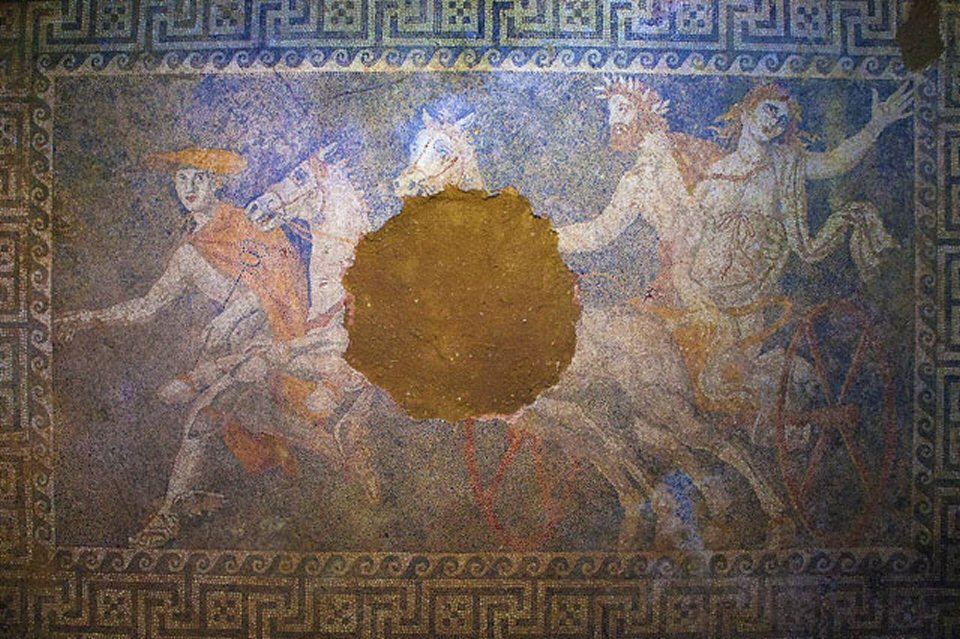
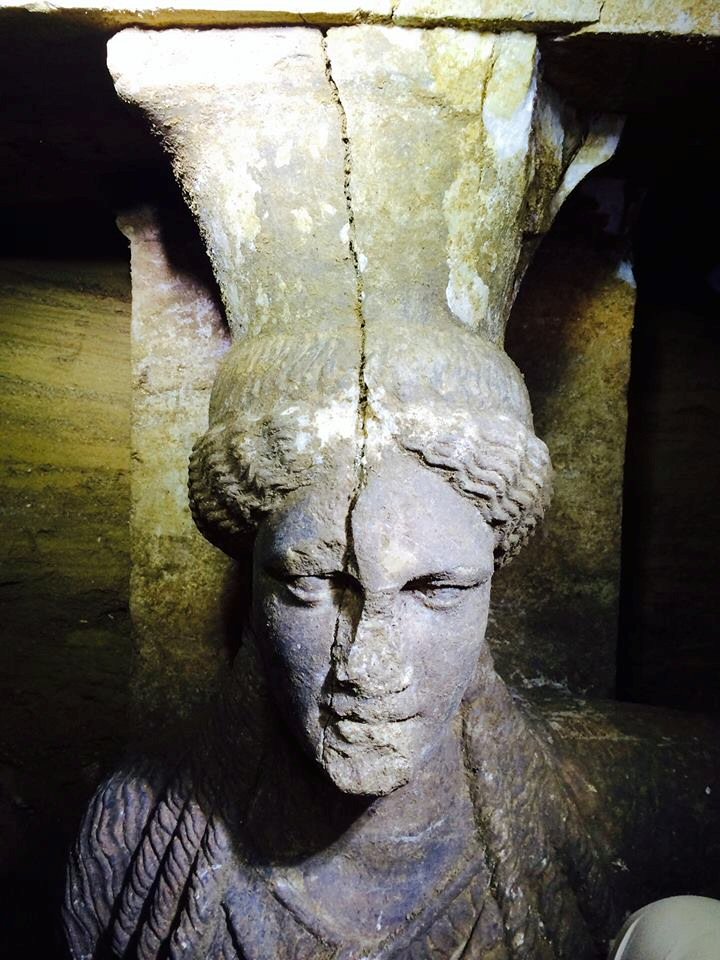
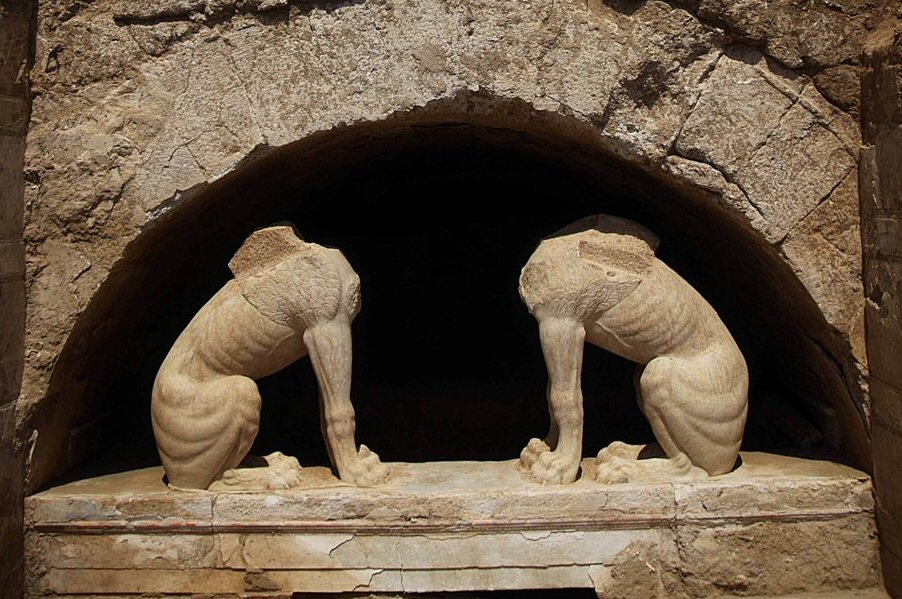
The ancient monument known as the Kasta Mound lying just outside the
ancient Macedonian city of Amphipolis has been subject to continual
excavation since the 1960s, but in August of 2014, the site came to
extraordinary prominence when its archaeologists announced the discovery
of chambers beneath the mound, which have become known as the Amphipolis
Tomb. This monument is of interest to the study of ancient history,
because it is the largest and most magnificently decorated tomb ever
discovered in Greece and because it appears to date to the immediate
aftermath of the reign of Alexander the Great. However, a particular
focus of interest is the question of the identity of the person for whom
this complex was constructed, because it must have been an individual of
exceptional importance. Yet the solution that has been proposed by the
archaeologists is quite at odds with our understanding of the history of
events after Alexander’s death as portrayed by the written sources and
all other evidence to date.
Click here to read more
|
 |
|
|
|
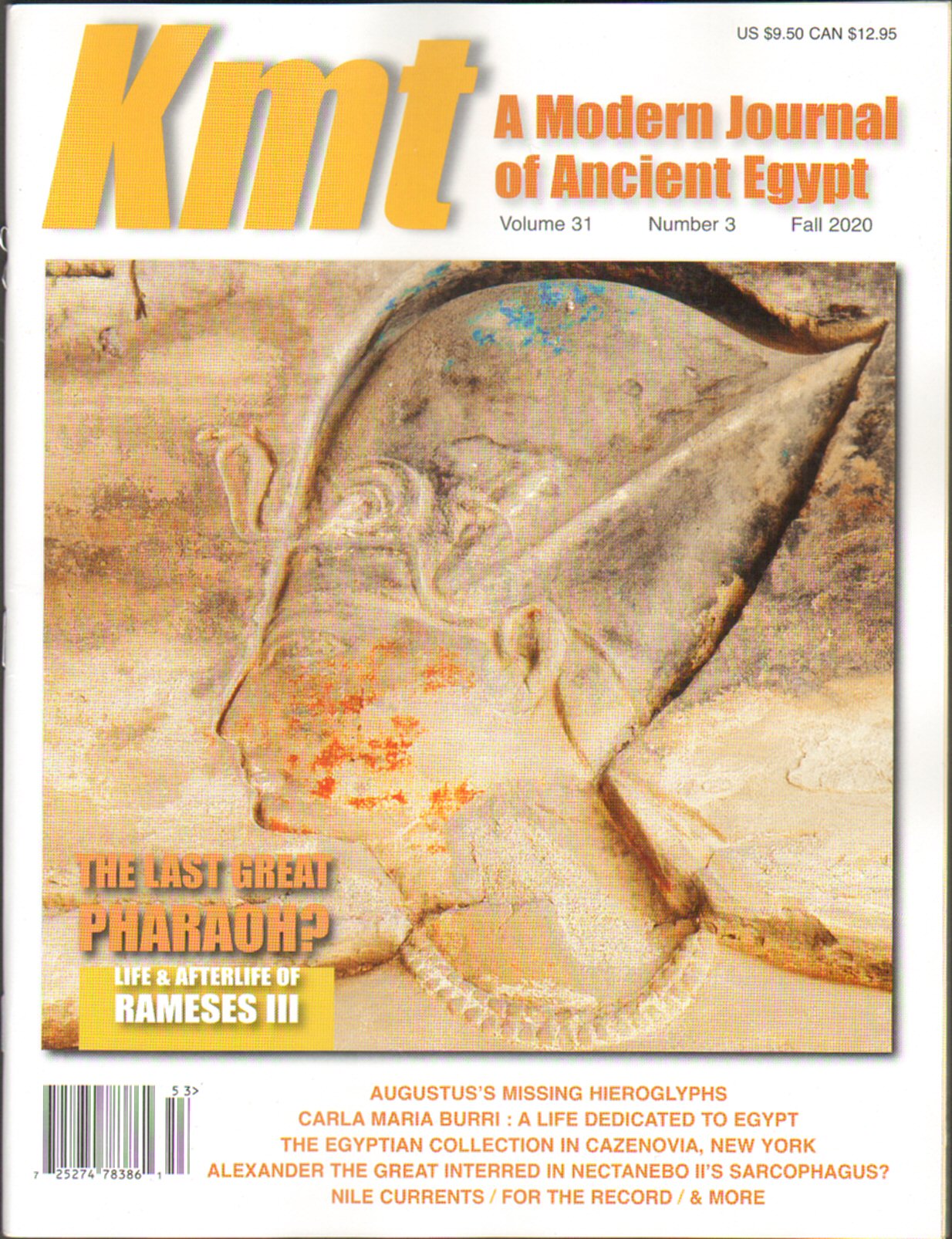
Autumn 2020 – Was Alexander the Great Originally Interred in the Usurped
Sarcophagus of Nectanebo II? In KMT: A Modern Journal of Egyptology,
Volume 31, Number 3, Fall 2020 |
|
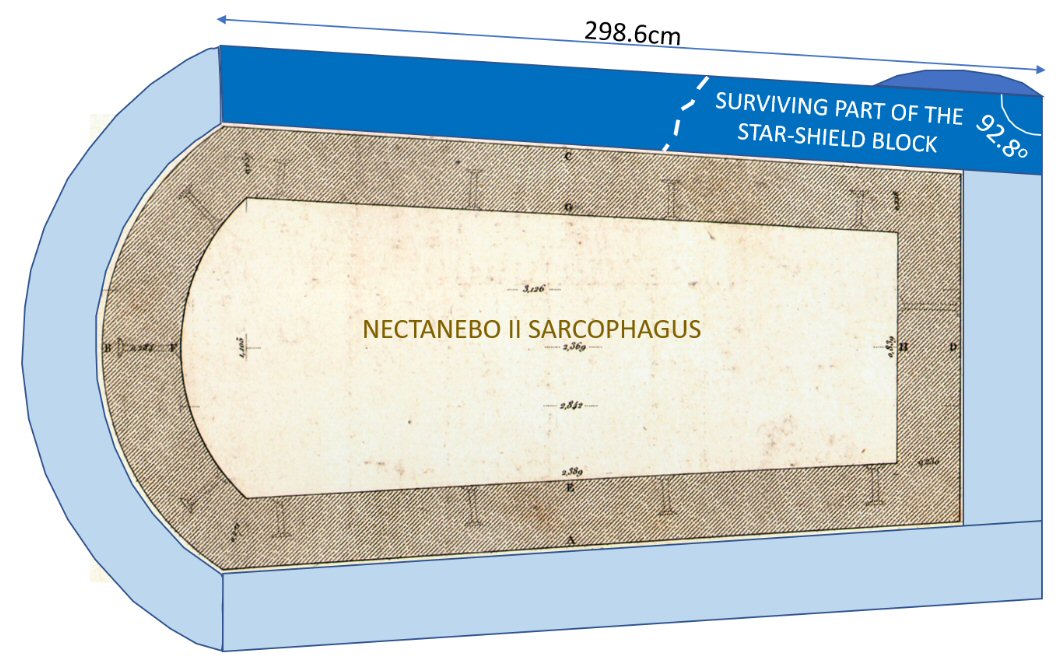
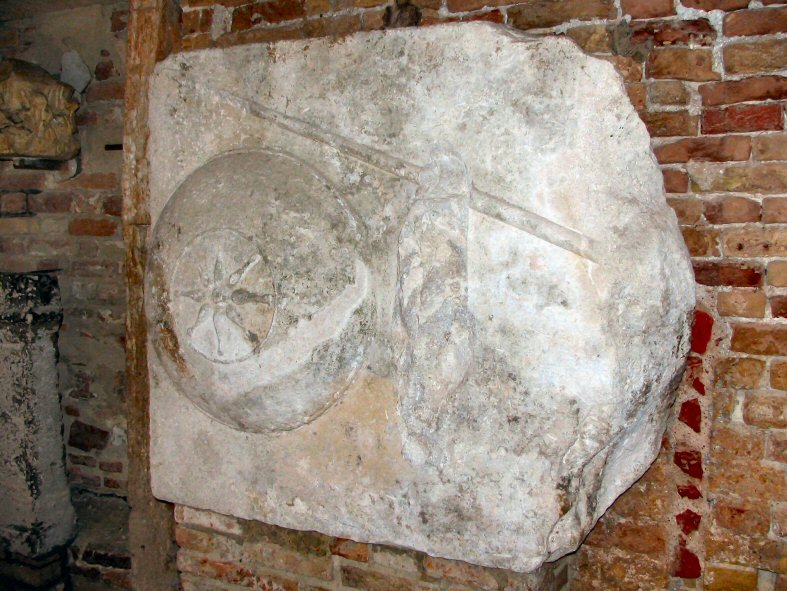
This article reviews the new evidence of the fit between the Star-Shield
Block in Venice and the Nectanebo II sarcophagus in the British Museum.
In a firmly evidence-based approach as required by this scientific
discipline, it shows that the concordance between these two artifacts is
too precise to be accounted for by chance at any significant
probability. The inevitable conclusion is that the Nectanebo II
sarcophagus was used by Ptolemy for Alexander’s entombment and that the
star-Shield Block is part of an outer casing added by one of the early
Ptolemies. Therefore, the chance that the skeleton from a perished mummy
now housed within the high altar of the Basilica di San Marco in Venice
is that of Alexander the Great is high and verification through an
independent scientific investigation is overdue.
Click here to read more
|
 |
|
|
|
July 2020 – Breakthroughs in the Search for Alexander's Lost Tomb -
Ancient Heroes Podcast 290720 |
|
An Ancient Heroes Podcast in which I am interviewed regarding the new
evidence confirming the theory regarding Alexander's mummy having been
re-labelled as that of St Mark the Evangelist in Alexandria at the time
that paganism was outlawed by the Christian Roman Emperor Theodosius in
AD391-392. Please follow this link to listen:
http://ancientheroes.net/blog/alexander-tomb-breakthrough-notes
|
 |
|
|
|
March 2020 – Ancient Origins article on Alexander’s Tomb discoveries |
|
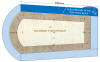
There was a Press Release entitled
The Tomb of Alexander the Great & the Graves of the Last Pharaohs
concerning the implications of the newly discovered fit between the
Nectanebo II sarcophagus and the Star-Shield Block (right) in early
March 2020, which led to a story entitled “Has the Location of Alexander
the Great’s Tomb Finally Been Identified?” on the popular Ancient
Origins website here:
https://www.ancient-origins.net/news-history-archaeology/alexander-greats-tomb-0013374
|
 |
|
|
|
February 2020 – British Museum changes its stance on Alexander’s tomb |
|
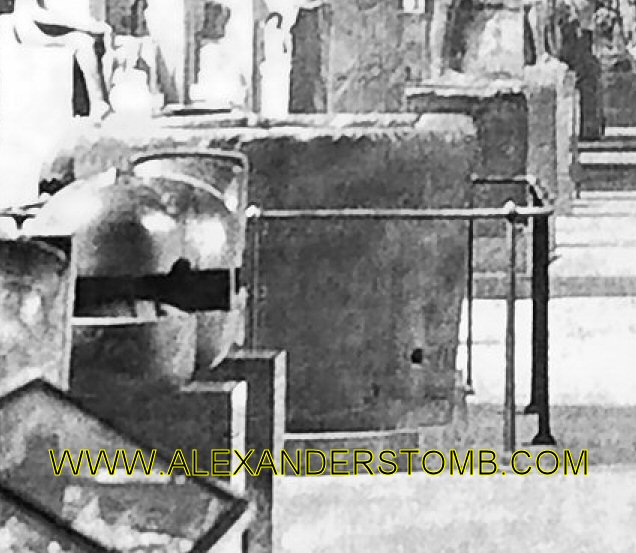
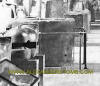
On 11th February 2020 following email discussions with Andrew Chugg, the
Egyptian Department of the British Museum (Dr Elisabeth R. O’Connell,
Duty Curator) agreed to change the wording under “Curator’s Comments” on
the Museum’s website page for the Nectanebo II sarcophagus (image on the
right from 1888) from “This object was incorrectly believed to be
associated with Alexander the Great when it entered the collection in
1803.” to “This object was believed to be associated with Alexander the
Great when it entered the collection in 1803.” This highly significant
change is scheduled to be implemented at the end of March 2020 and has
the effect that after 200 years of sceptical curatorship the British
Museum no longer dismisses the association between the sarcophagus and
Alexander’s tomb. The British Museum website page is currently at this
address:
https://research.britishmuseum.org/research/collection_online/collection_object_details.aspx?objectId=111535&partId=1
|
 |
|
|
|
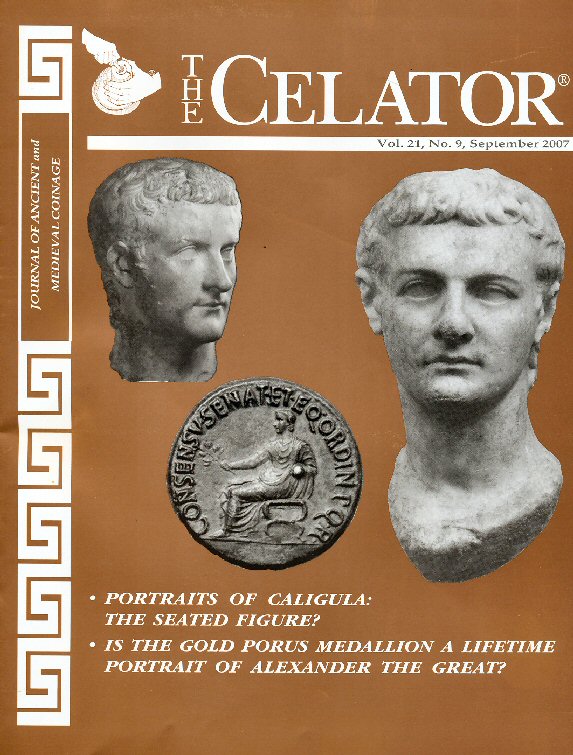
January 2020 – The rarest coins issued by Alexander the Great |
|
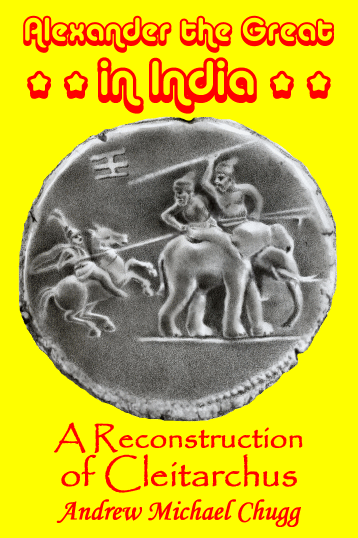
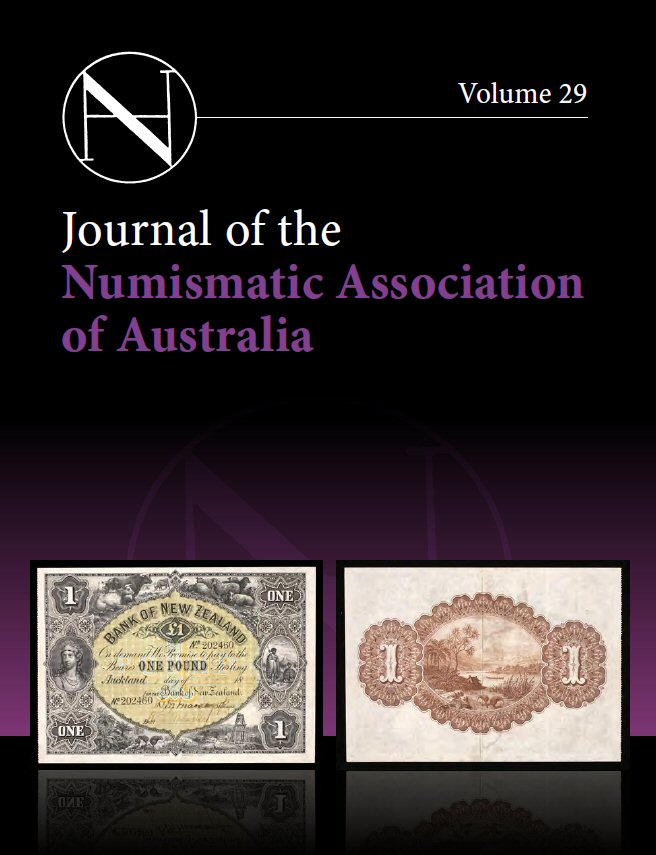
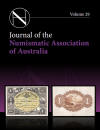
The so-called Porus medallions of Alexander the Great – crucial
historical numismatic objects or clever counterfeits? By Michael E.
Habicht, Andrew M. Chugg, Elena Varotto, Francesco M. Galassi published
in JNAA Vol 29, January 2020.
The paper discusses the so-called Porus medallions associated with the
military campaign of Alexander the Great (356-323 BC) in northern India,
and specifically with the battle of the Hydaspes in the early Summer of
326 BC. At the present time, three types of silver medallion (of coin
weight) and a unique gold medallion are known. The authors assess the
propaganda message, and the doubts concerning the authenticity of some
of these types. |
 |
|
|
|
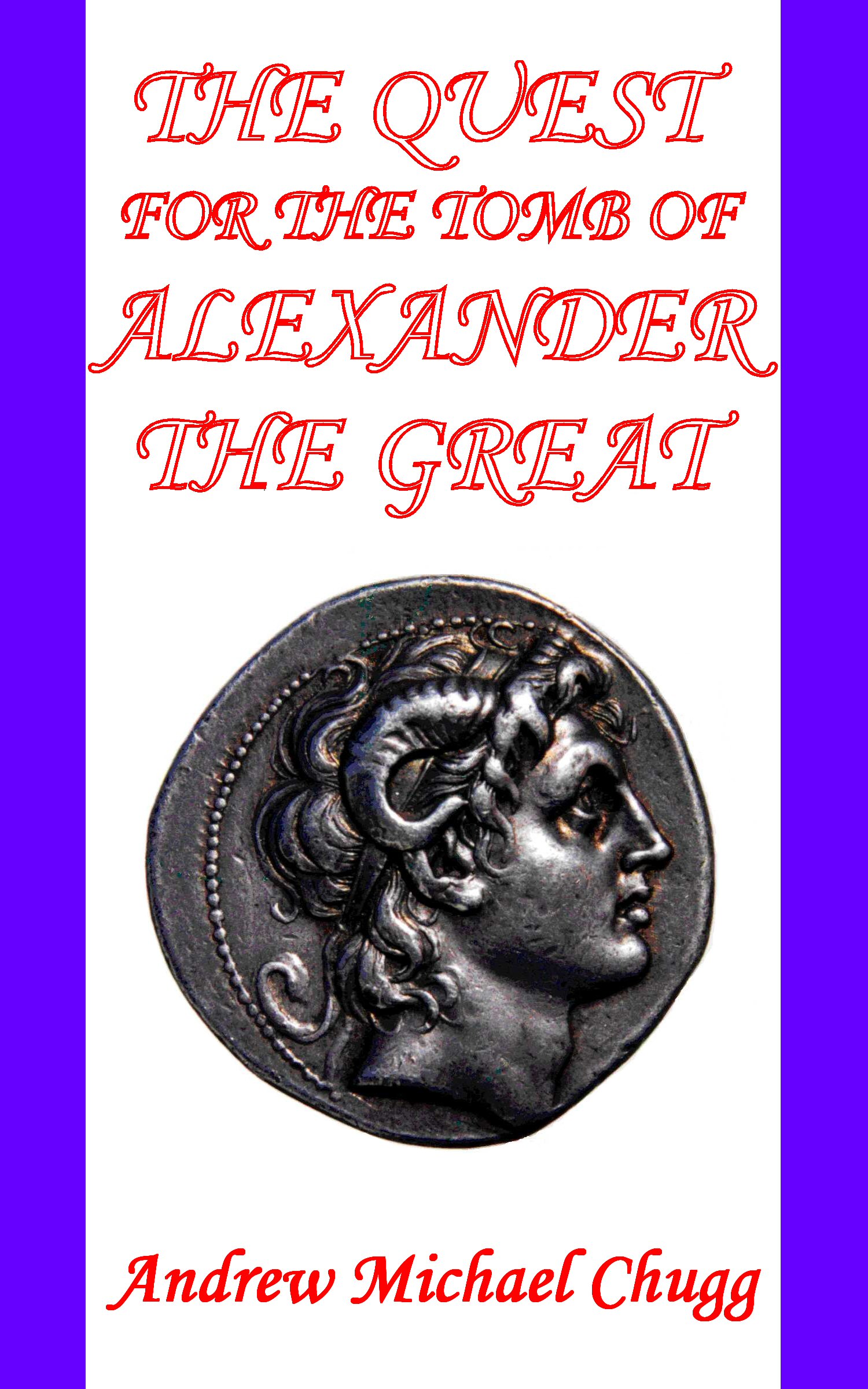
January 2020 – Third Extended Edition of The Quest for the Tomb of
Alexander the Great |
|
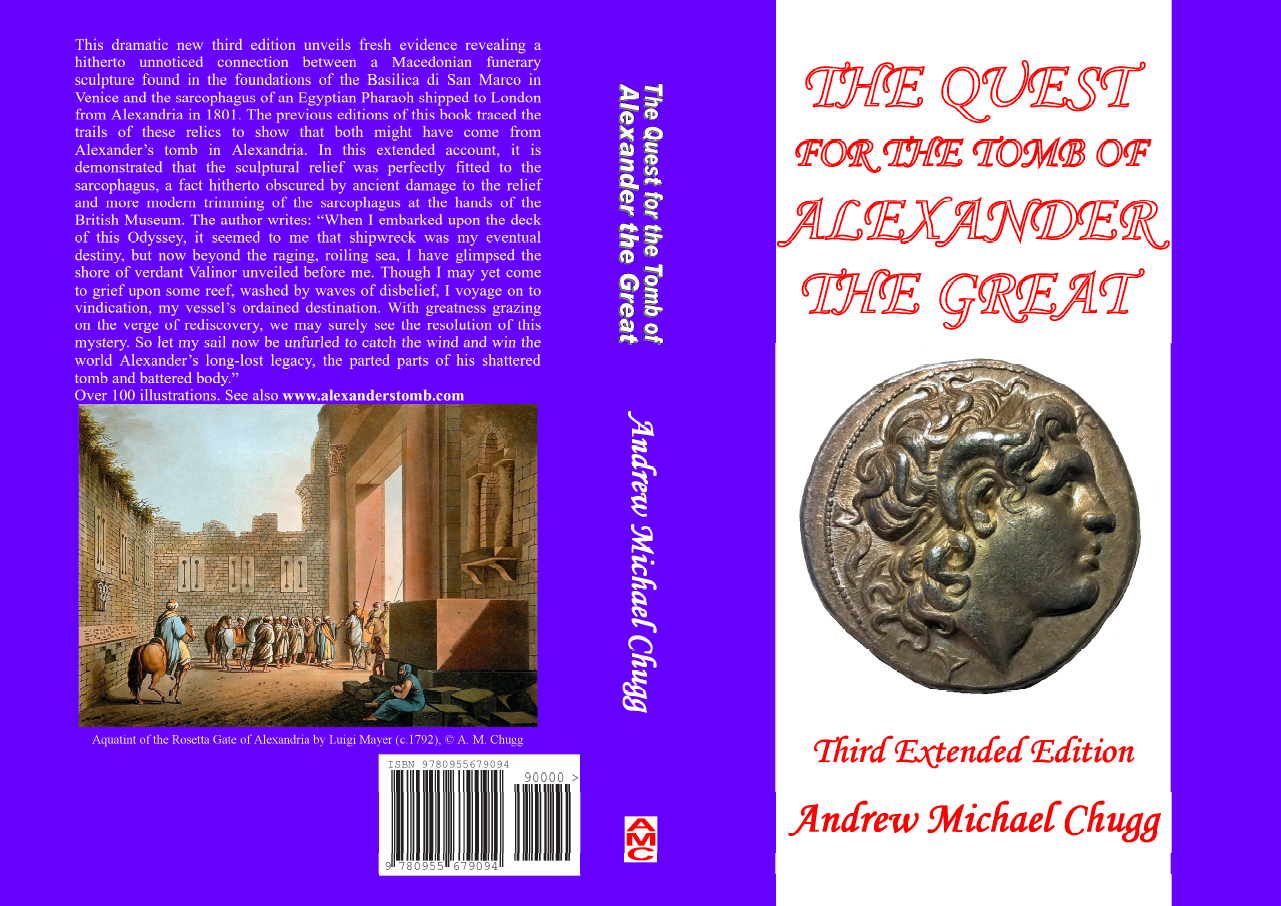
This dramatic new third edition unveils fresh evidence revealing a
hitherto unnoticed connection between a Macedonian funerary sculpture
found in the foundations of the Basilica di San Marco in Venice and the
sarcophagus of an Egyptian Pharaoh shipped to London from Alexandria in
1801. The previous editions of this book traced the trails of these
relics to show that both might have come from Alexander’s tomb in
Alexandria. In this extended account, it is demonstrated that the
sculptural relief was perfectly fitted to the sarcophagus, a fact
hitherto obscured by ancient damage to the relief and more modern
trimming of the sarcophagus at the hands of the British Museum. The
author writes: “When I embarked upon the deck of this Odyssey, it seemed
to me that shipwreck was my eventual destiny, but now beyond the raging,
roiling sea, I have glimpsed the shore of verdant Valinor unveiled
before me. Though I may yet come to grief upon some reef, washed by
waves of disbelief, I voyage on to vindication, my vessel’s ordained
destination. With greatness grazing on the verge of rediscovery, we may
surely see the resolution of this mystery. So let my sail now be
unfurled to catch the wind and win the world Alexander’s long-lost
legacy, the parted parts of his shattered tomb and battered body.”
Available late January 2020 through Amazon and other online bookshops.
|
 |
|
|
|
August 2019 – Research Trip to Venice |
|
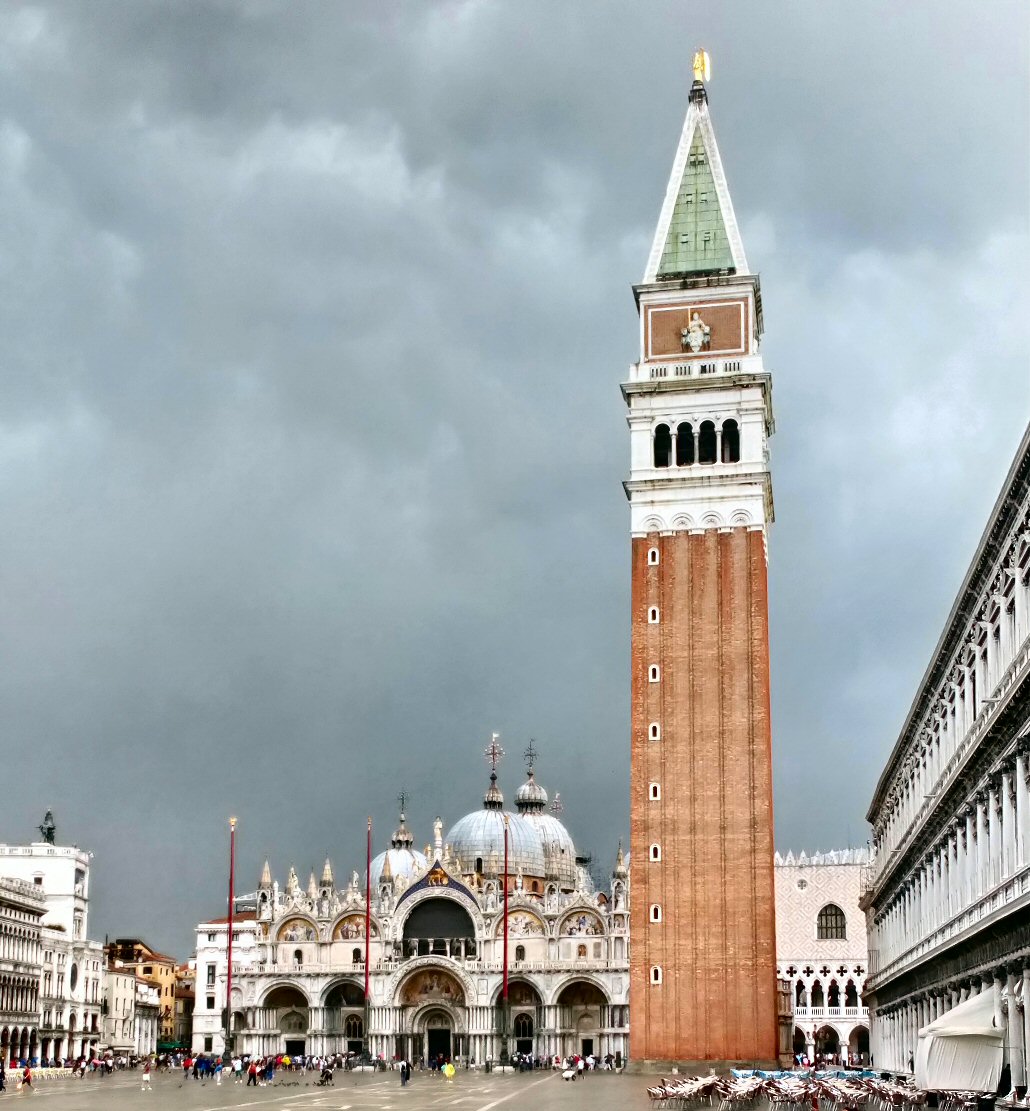
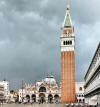
Andrew Chugg visited Venice for a couple of days (2nd-3rd
August) to pursue his research on alexander’s tomb. He visited the
Star-Shield block in the cloister of St Apollonia, the Church’s
sculptural museum just across the canal behind San Marco in the photo.
The measurements made have led to a new verification of the St Mark
connection.
|
 |
|
|
|
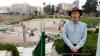
March 2019 – Filming in Alexandria for a New Documentary |
|
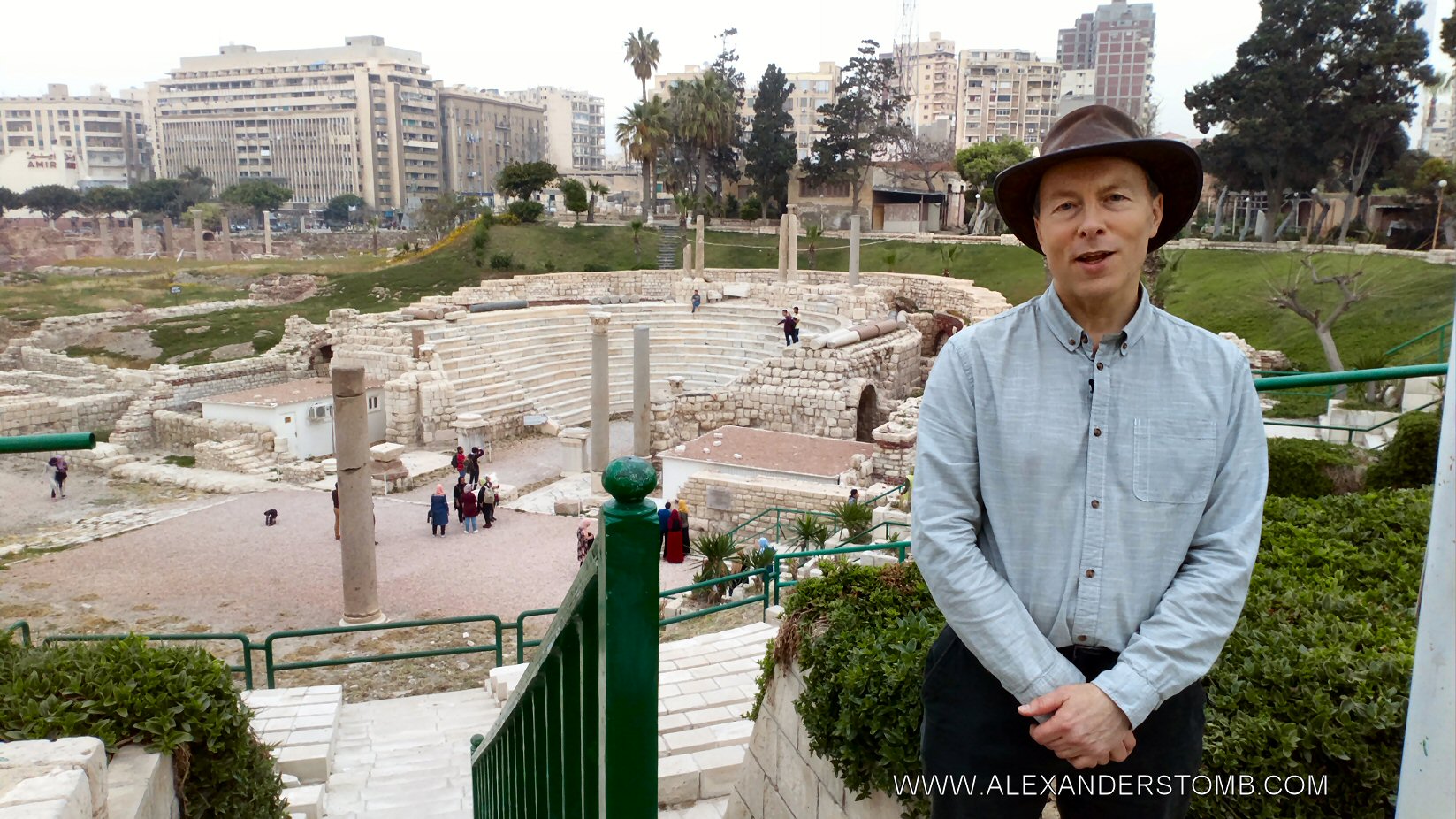
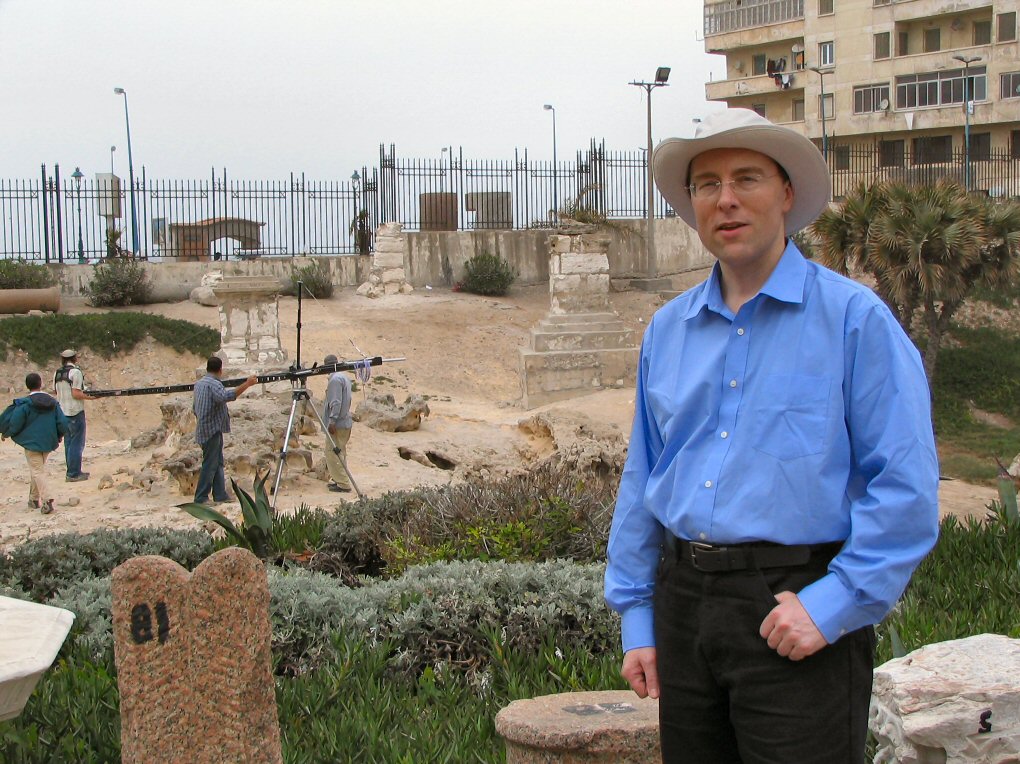
Andrew Chugg was filmed in Cambridge UK and in Alexandria in Egypt
during March 2019 for a forthcoming TV documentary concerning some of
the monuments of ancient Alexandria. The photo shows Andrew during
filming at the excavated ancient Roman Theatre in central Alexandria on
28th March. It can be seen that the ancient street level was
about 10m below the modern city. It is hoped to post more news on this
production in the coming months.
|
 |
|
|