 |
|
 |
 |
||
 |
|||||
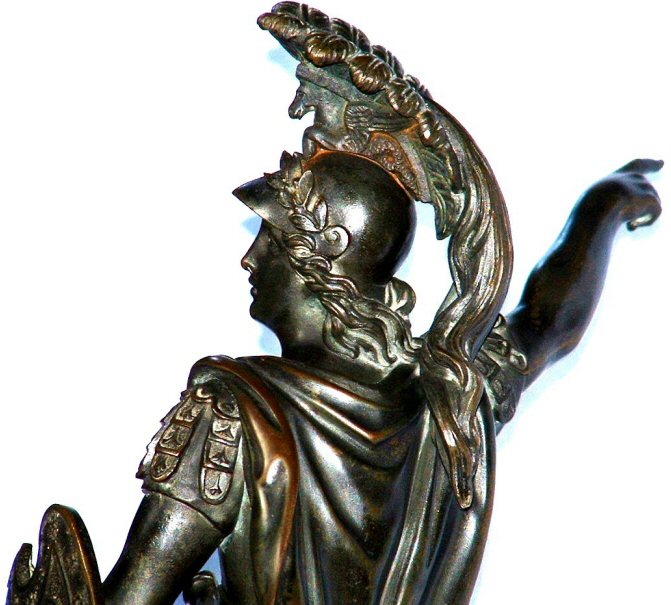
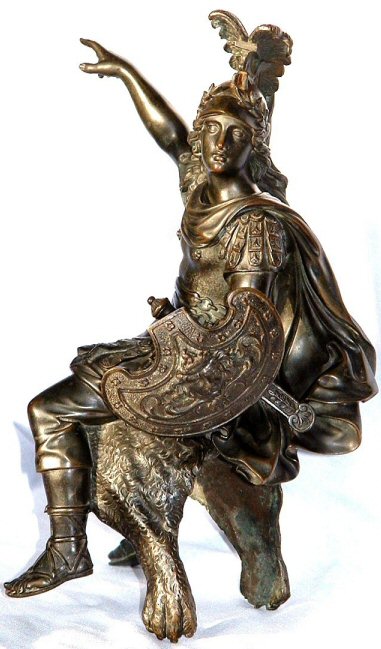
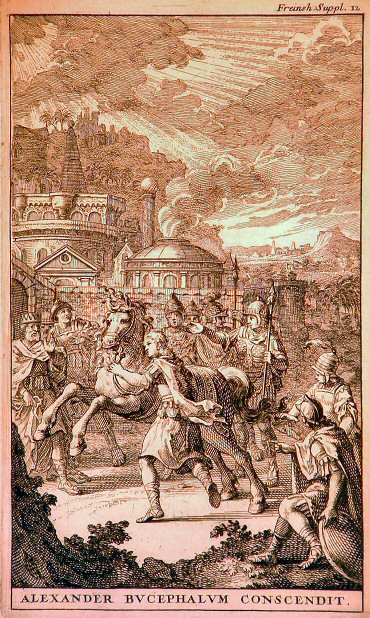
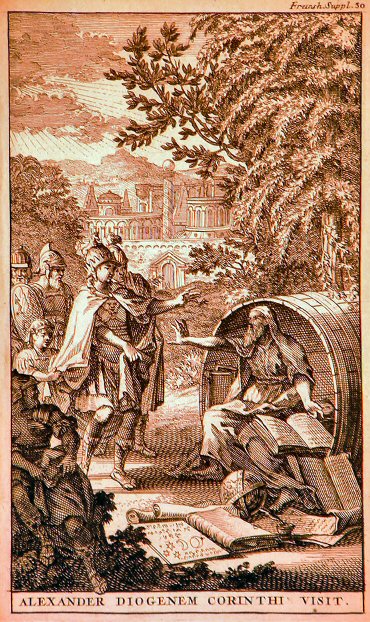
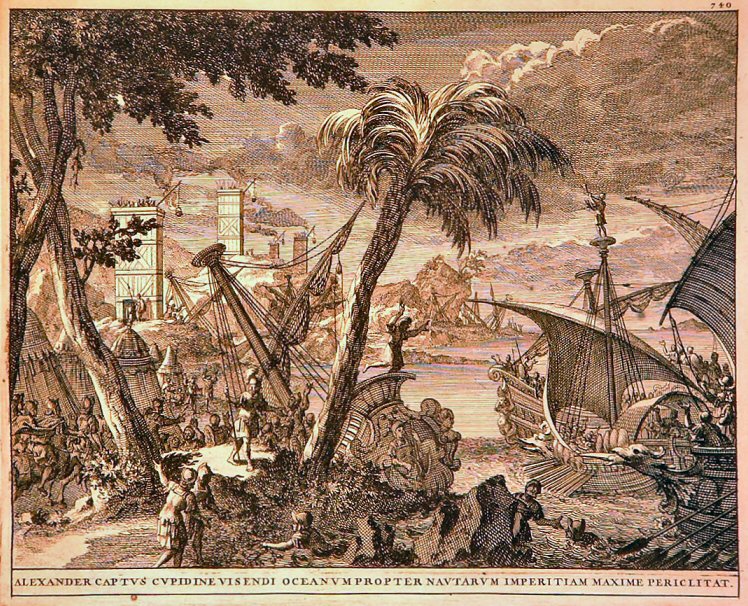
| Full view of bronze equestrian statuette of Alexander (mount missing), 19th century or earlier, based on the representations of Alexander in the paintings of Charles le Brun, First Painter to Louis XIV from 1664 until his death in 1690. | Rear upper body view of bronze equestrian statuette of Alexander (mount missing), 19th century or earlier, based on the representations of Alexander in the paintings of Charles le Brun, First Painter to Louis XIV from 1664 until his death in 1690. | Alexander is seized with a desire to visit the nearby Indian Ocean placing the sailors in great danger (1696) | Alexander mounts Bucephalus - for the first time, after having turned the horse into the sun, because he was shying from his shadow (1696) | Alexander visits Diogenes in Corinth -Diogenes asks him to stand out of his sun (1696) | |
 |
 |
 |
 |
 |
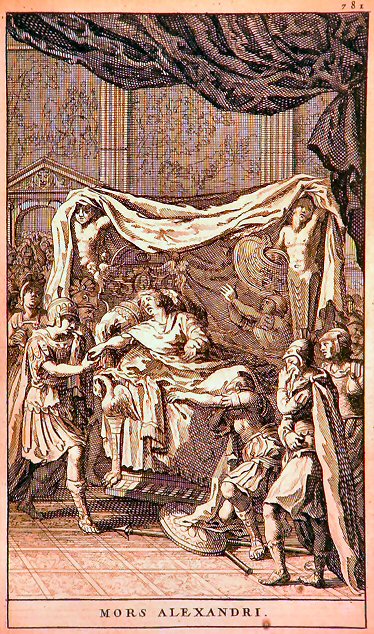 |
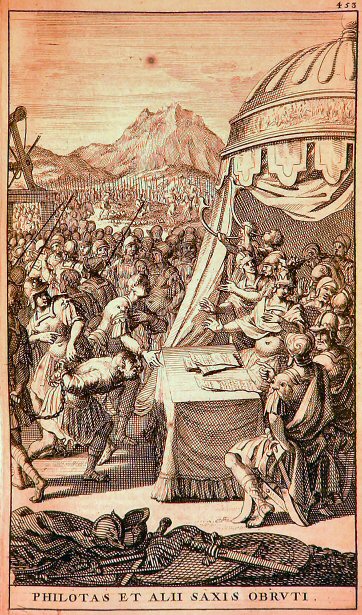
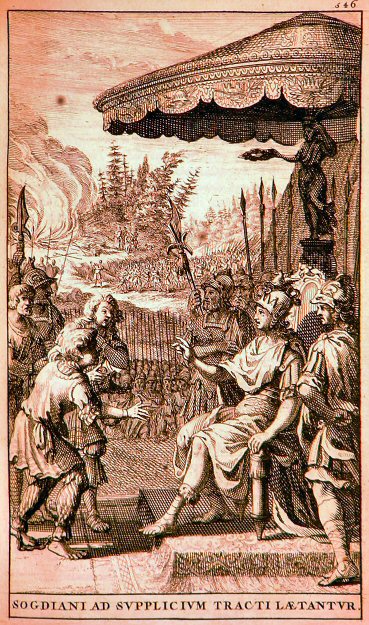
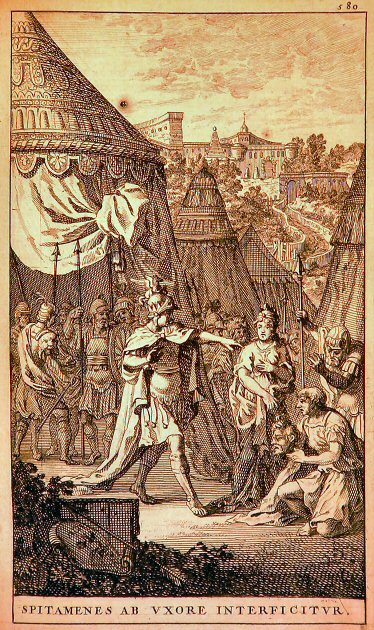
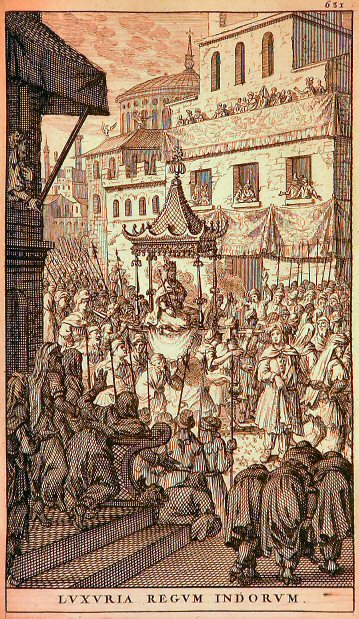
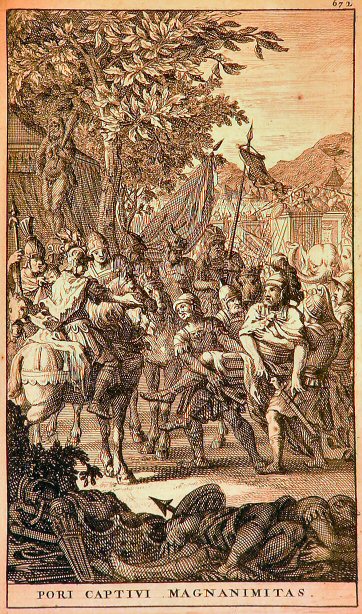
| Philotas and other conspirators condemned and stoned to death (1696) | Sogdian prisoners are joyful at being condemned by so great a king as Alexander, who consequently pardons them [Curtius 7.10.4-9] (1696) | The head of Spitamenes is presented to Alexander by his wife, who had decapitated him [Curtius 8.3.2-15] (1696) | The opulence of the Indian kings (1696) | The magnanimity of Alexander towards the captive Porus (1696) | The death of Alexander (1696) |
 |
 |
 |
 |
 |
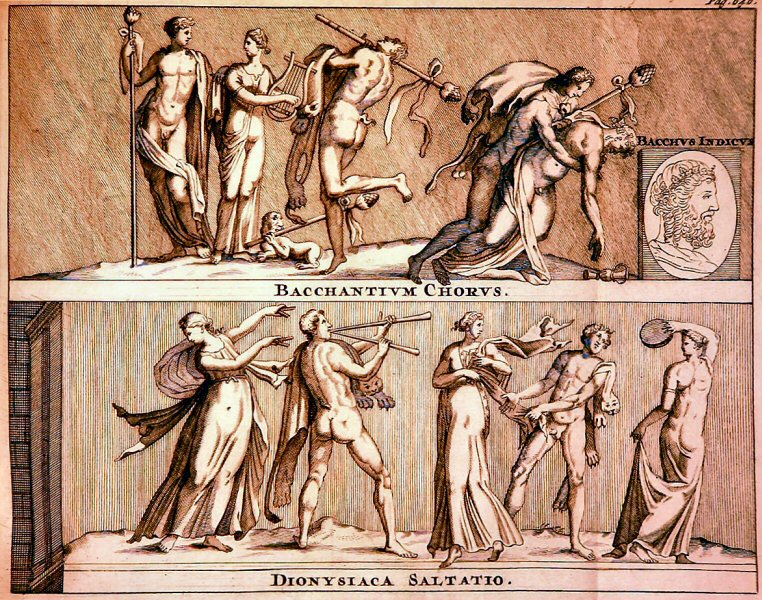 |
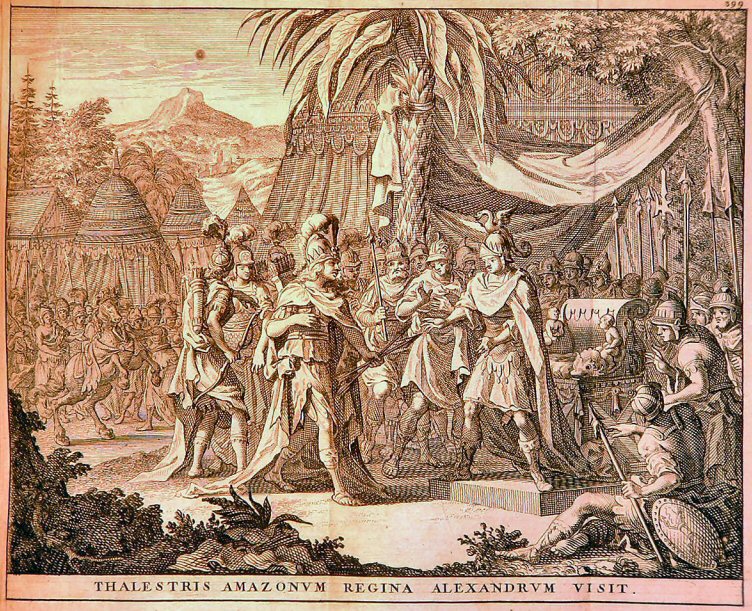
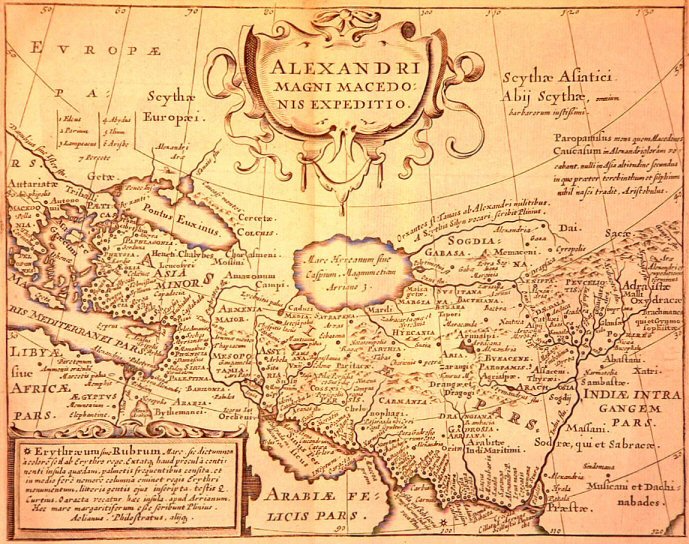
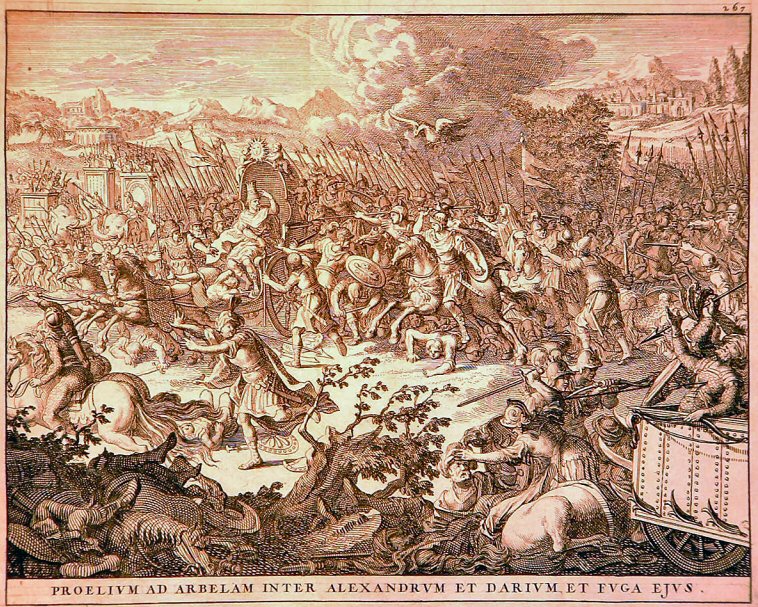
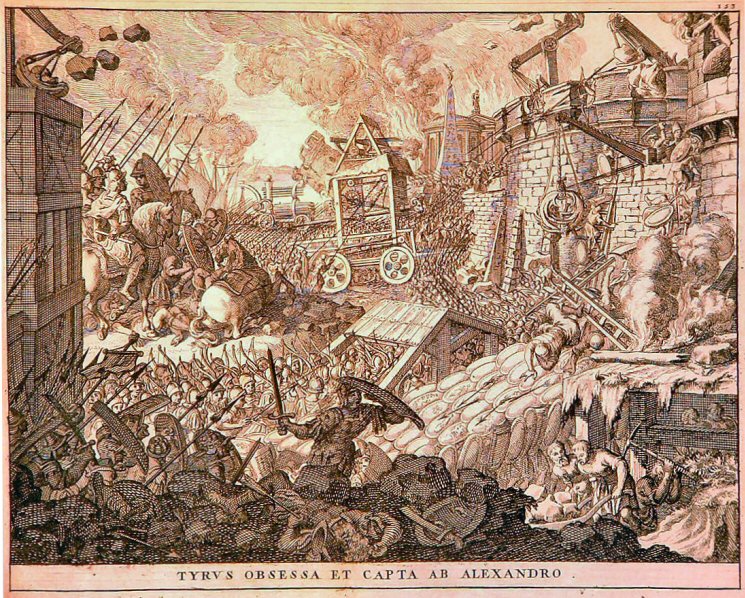
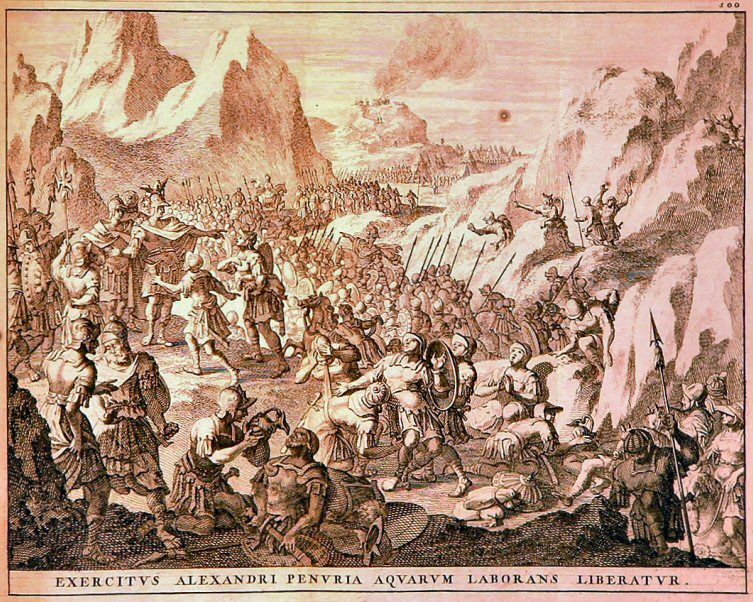
| Thalestris, Queen of the Amazons, visits Alexander (1696) | Map of the expedition of Alexander the Great of Macedon (1696) | The battle at Arbela (Gaugamela) between Alexander and Darius, who is in flight (1696) | Tyre besieged and captured by Alexander (1696) | Alexander sends away scarce water proffered to him in a parched region of Sogdiana [Curtius 7.5.9, cf. Arrian 6.26.1] (1696) | Bacchanal and Dionysiac dances (1696) |
 |
 |
 |
 |
 |
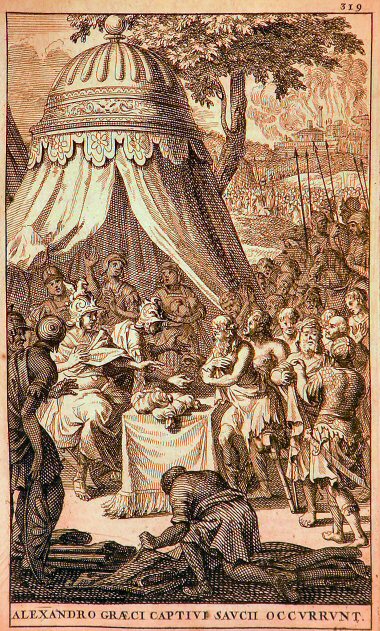 |
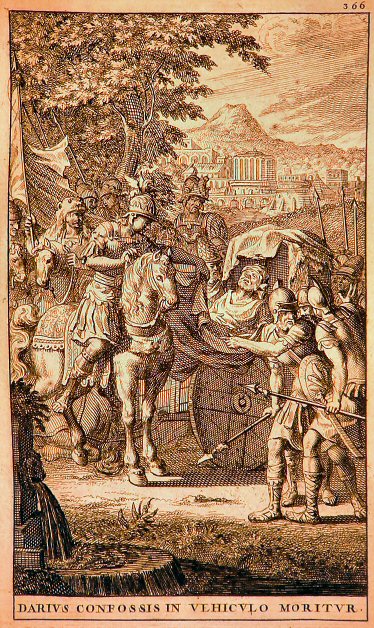
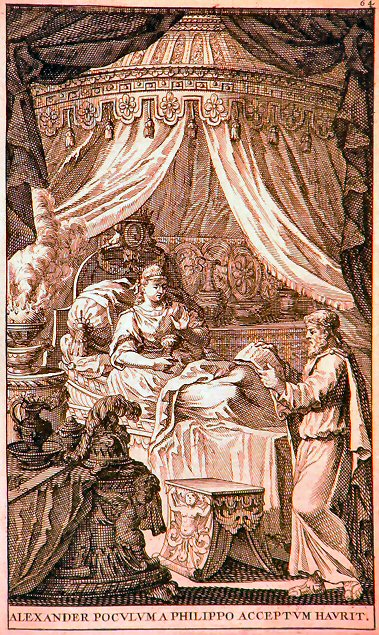
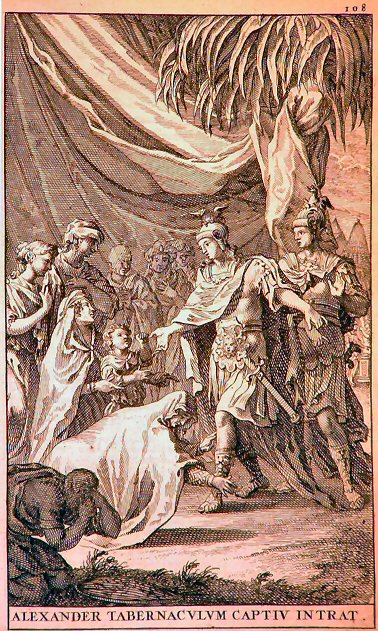
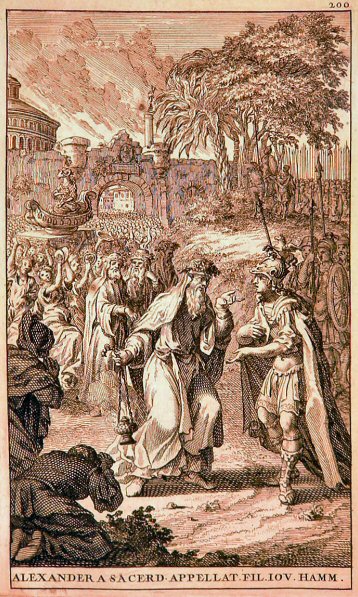
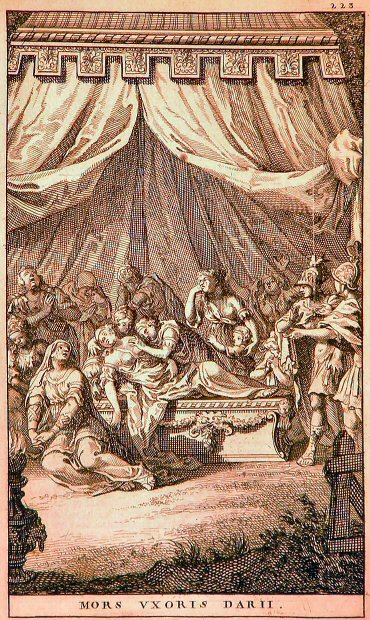
| Darius run through and dead in a wagon, inspected by Alexander (1696) | Alexander swallows the cup of medicine prepared by his doctor, Philip and hands him a message warning that his doctor would try to poison him (1696) | Alexander and Hephaistion enter within the tent of the captive royal family of Darius - the queens mistake Hephaistion for Alexander, but Alexander responds, "He too is Alexander" (1696) | Alexander called the son of Jupiter-Ammon by the priest at the oracle in the Siwa oasis (1696) | The death through illness of Statira, the wife of Darius (1696) | Alexander meets the mutilated Greek captives of the Persians (1696) |
 |
 |
 |
 |
 |
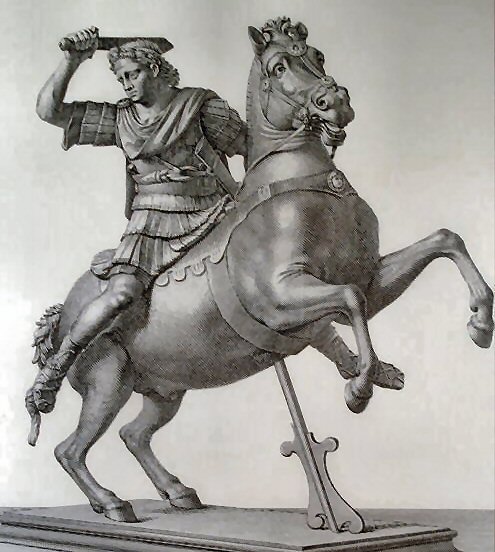 |
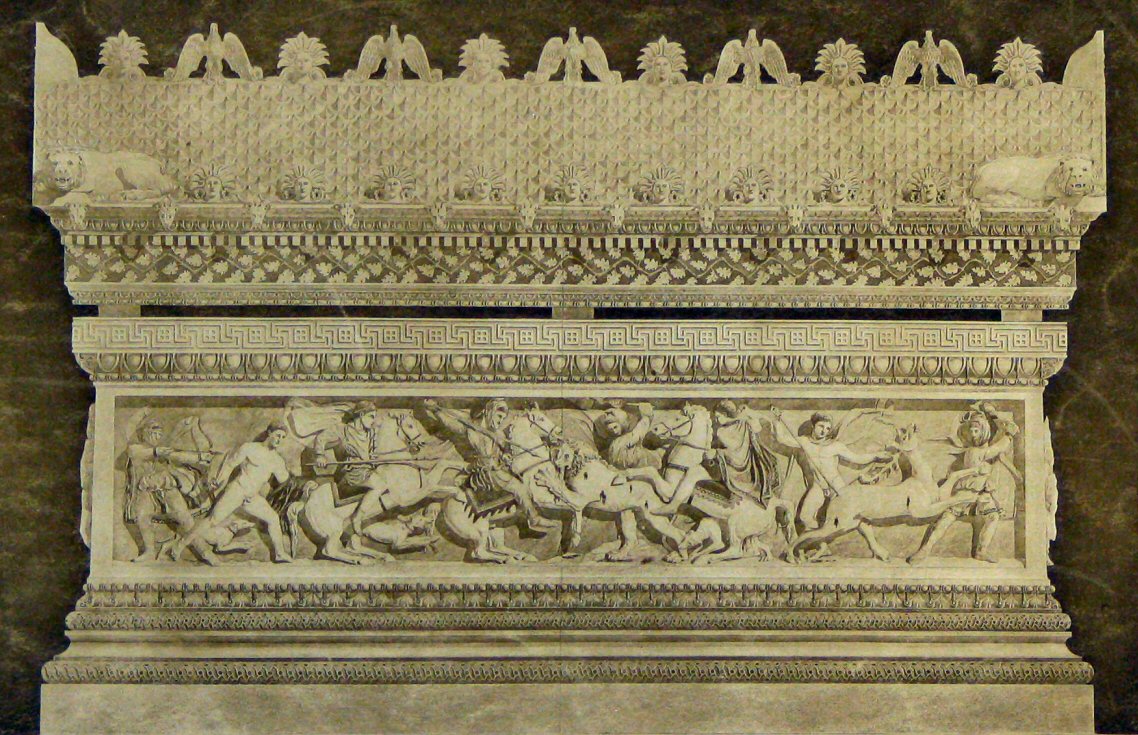
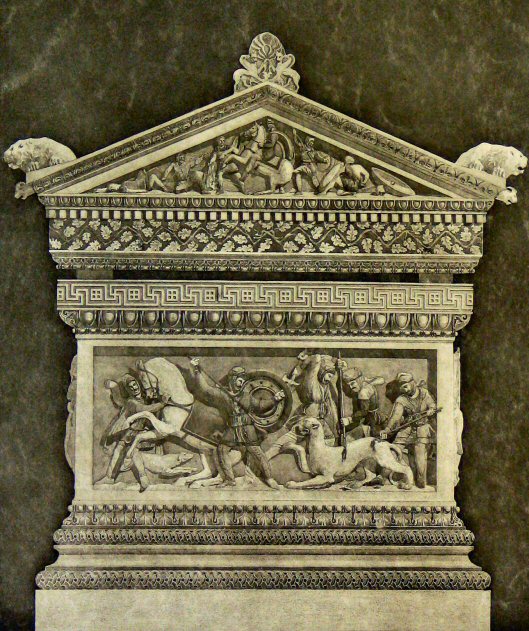
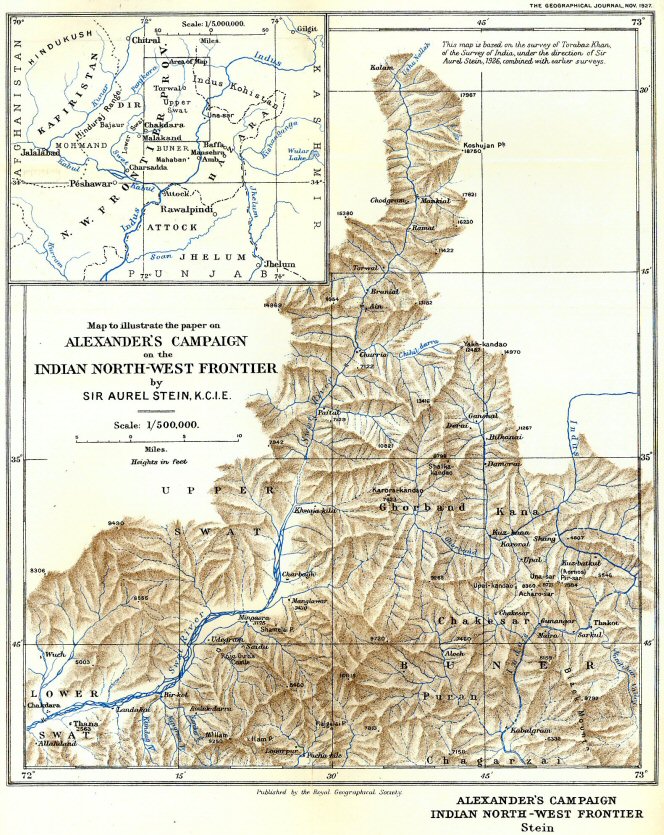
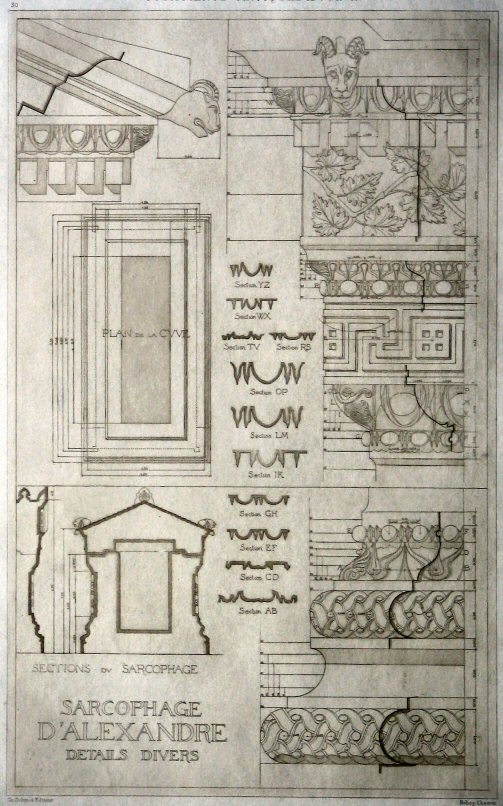
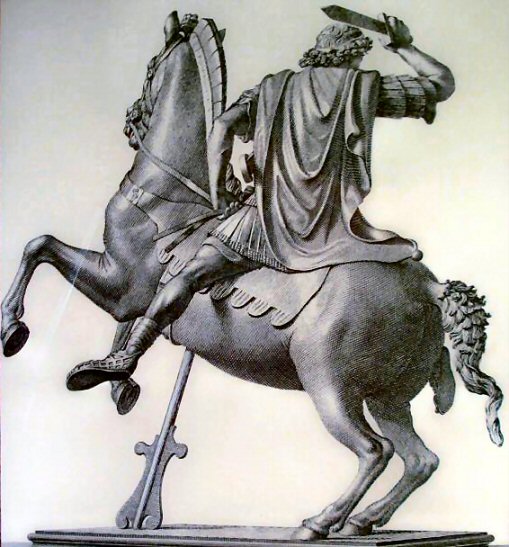
| Heliogravure published by Hector d’Espouy of a reconstruction by Ernest Hébrard of the hunting scene on a long side of the Alexander Sarcophagus from Sidon with Alexander, Abdalonymus, Hephaistion and others (1904) | Heliogravure published by Hector d’Espouy of a reconstruction by Ernest Hébrard of the panther hunt scene on one end of the Alexander Sarcophagus from Sidon with Abdalonymus and his soldiers in the pediment scene above (1904) | The region of the Indian NW frontier where Sir Aurel Stein traced Alexander’s initial Indian campaigns against Massaga and her neighbours (1927) | Heliogravure published by Hector d’Espouy of Ernest Hébrard’s architectural details of the Alexander Sarcophagus from Sidon (1904) | Engraving of the bronze statuette of Alexander on Bucephalus found during excavation of Herculaneum near Pompeii and now in the Naples Museum, originally published in “Le Antichita Di Ercolano Esposte” in the mid-18th century, artist Giovanni Casanova, engraved by Francesco Cepparoli, rear view | Engraving of the bronze statuette of Alexander on Bucephalus found during excavation of Herculaneum near Pompeii and now in the Naples Museum, originally published in “Le Antichita Di Ercolano Esposte” in the mid-18th century, artist Giovanni Casanova, engraved by Francesco Cepparoli, front view |
 |
 |
 |
 |
 |
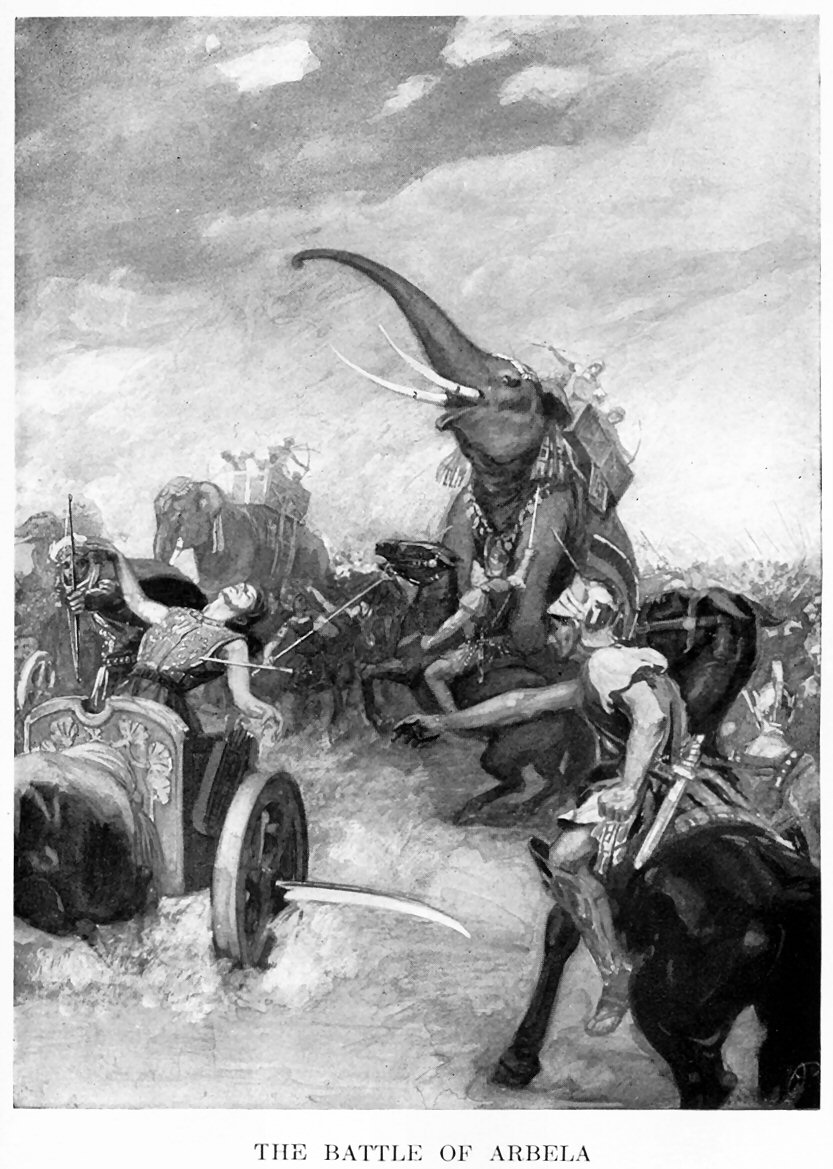 |
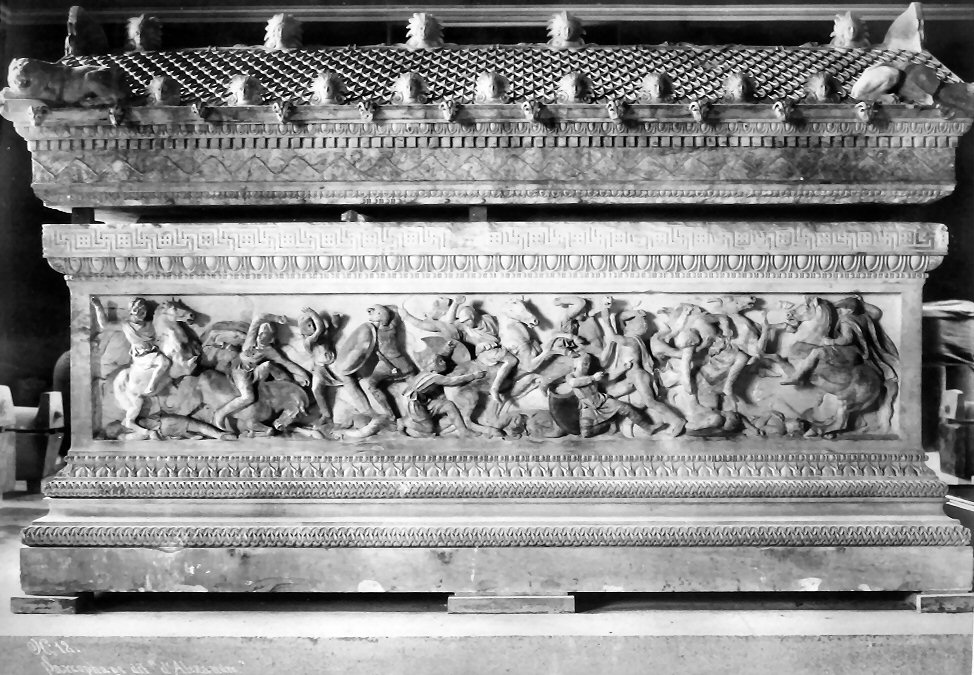
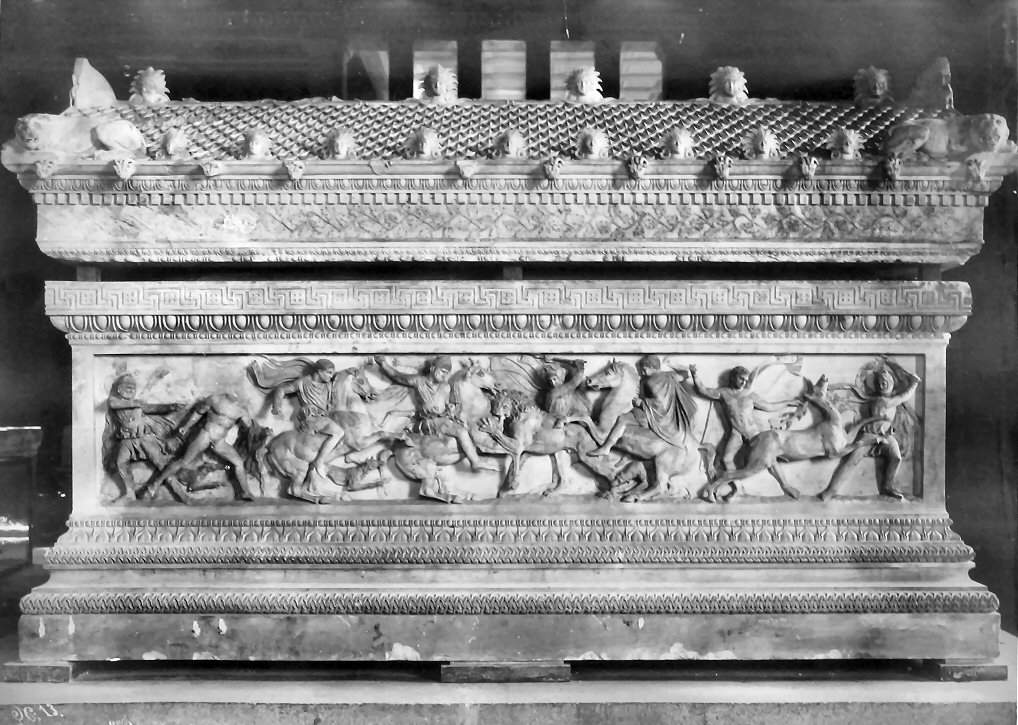
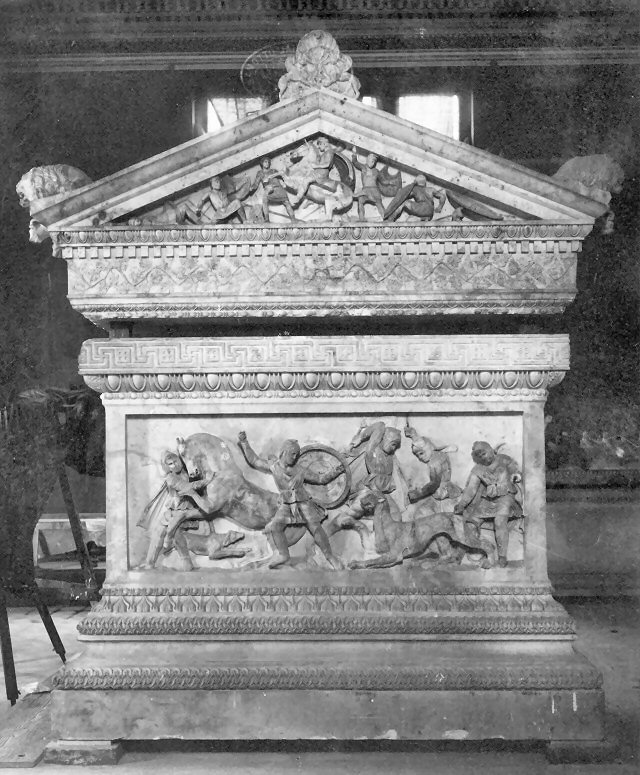
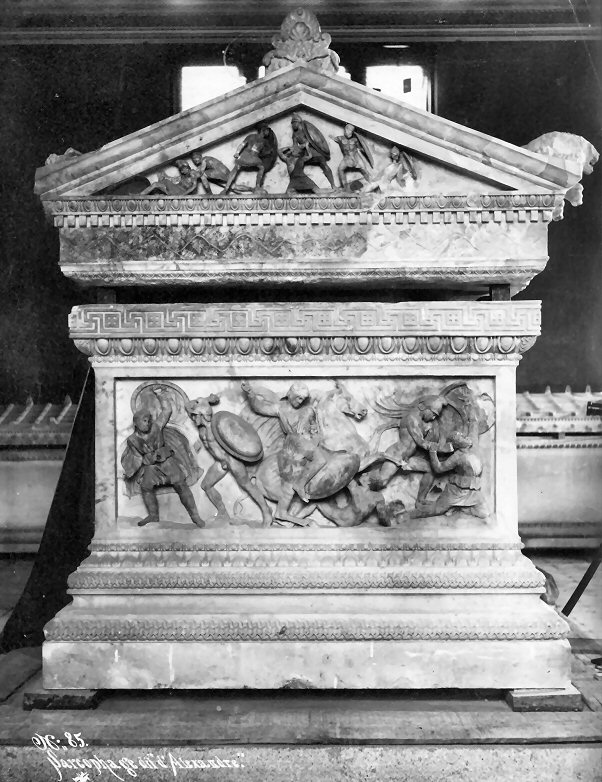
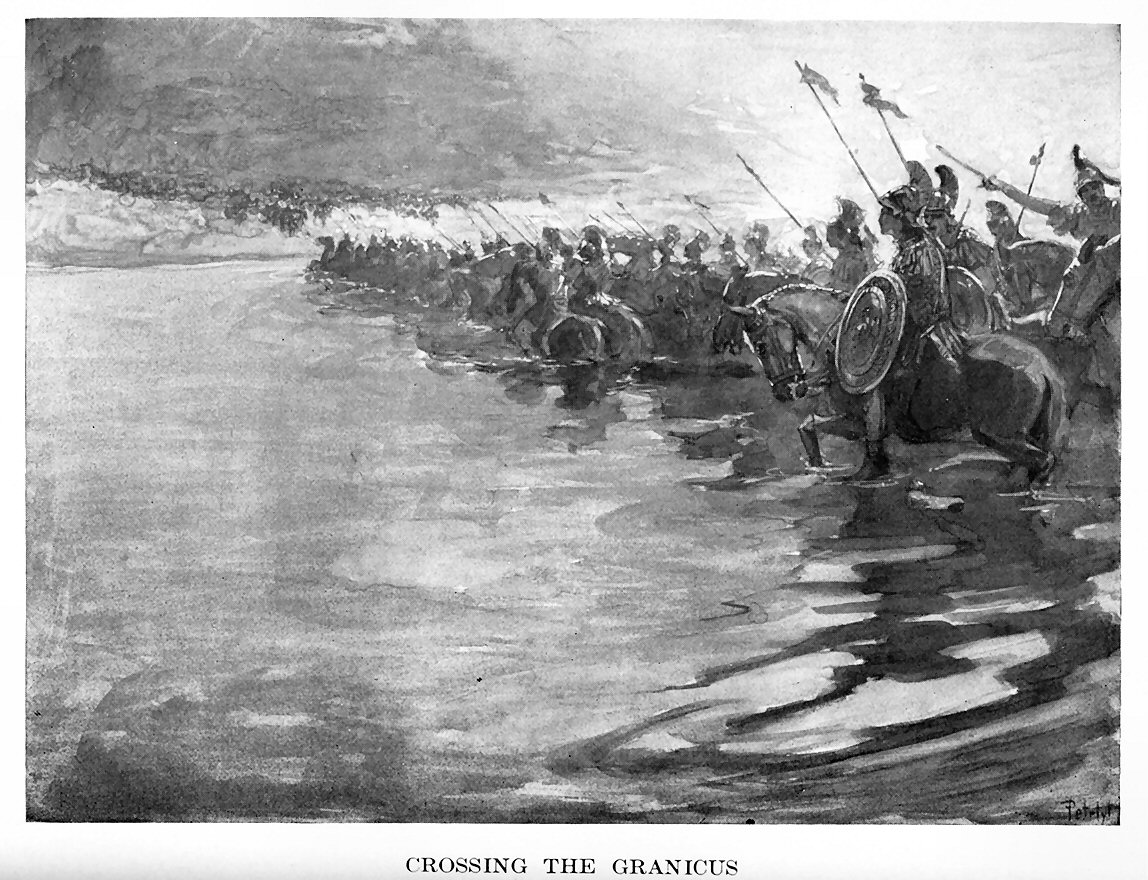
| Battle scene (Issus 333BC?) with Alexander the Great on the Alexander Sarcophagus from Sidon believed to have belonged to Abdalonymus in an albumen photo taken shortly after its discovery in 1887 | Hunting scene with Alexander the Great on the Alexander Sarcophagus from Sidon believed to have belonged to Abdalonymus in an albumen photo taken shortly after its discovery in 1887 | A panther hunt on the Alexander Sarcophagus from Sidon believed to have belonged to Abdalonymus in an albumen photo taken shortly after its discovery in 1887 | Battle scene (Gaza 312BC?) on the Alexander Sarcophagus from Sidon believed to have belonged to Abdalonymus in an albumen photo taken shortly after its discovery in 1887 | The cavalry charge across the river at the Battle of the Granicus by August Petrtyl (published 1909) | The Battle of Gaugamela (aka Arbela) with elephants and scythed chariots by August Petrtyl (published 1909) |
 |
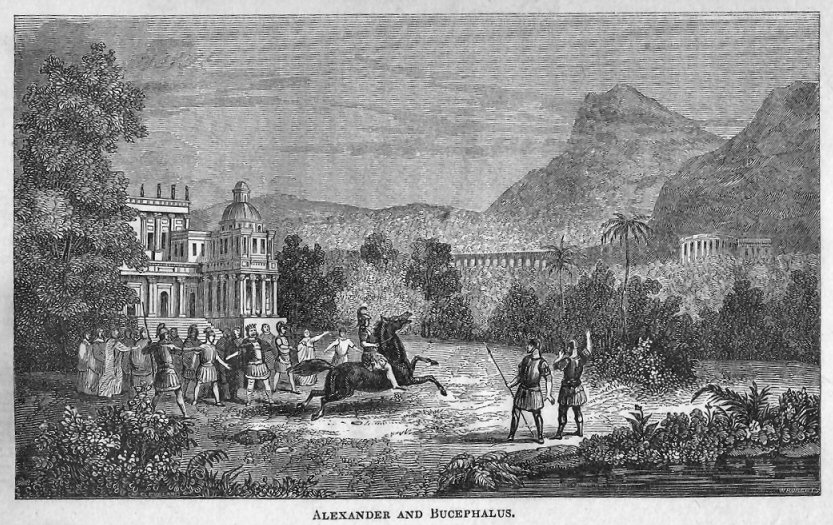 |
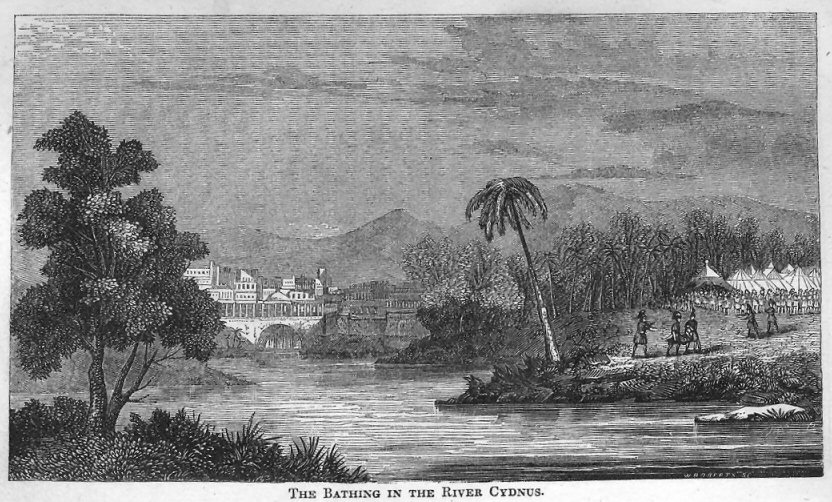 |
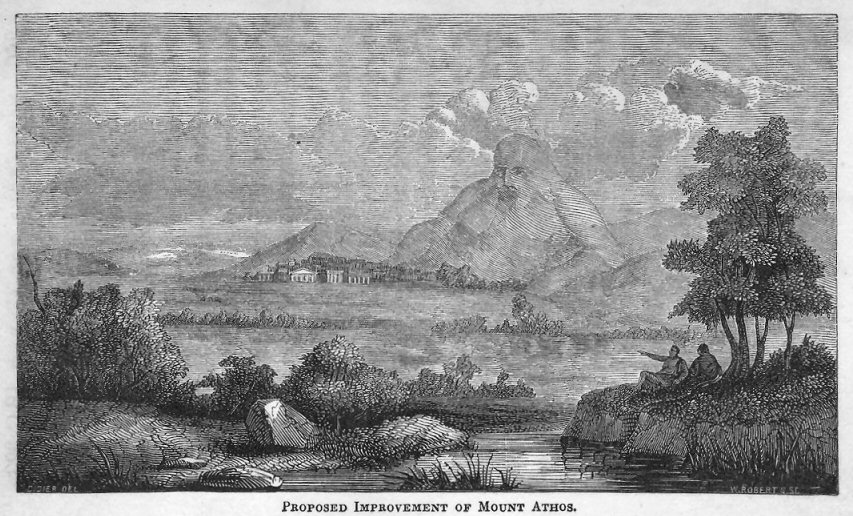 |
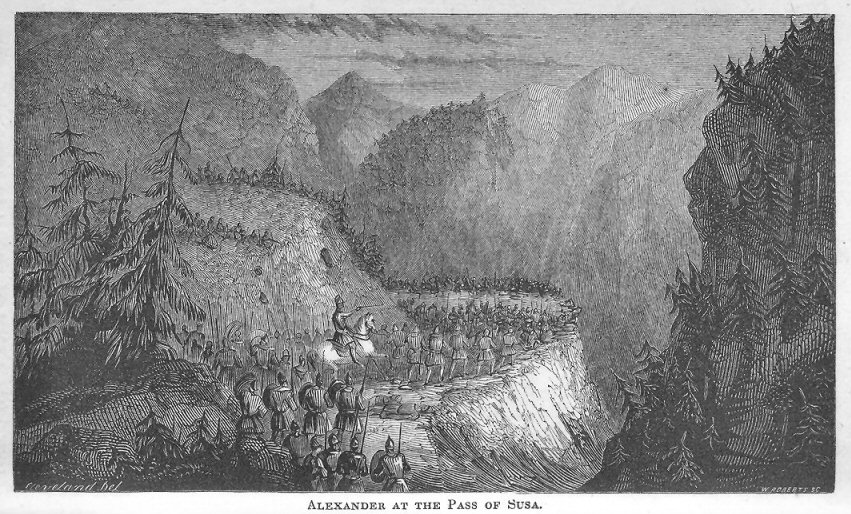 |
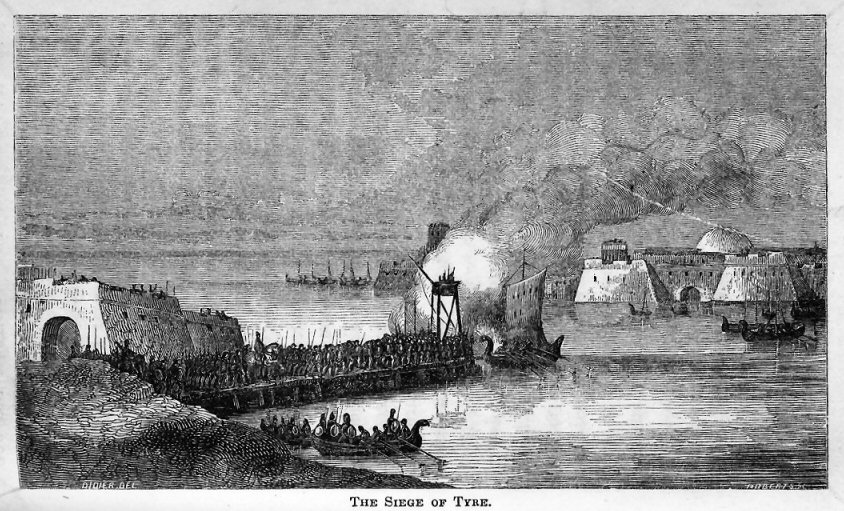 |
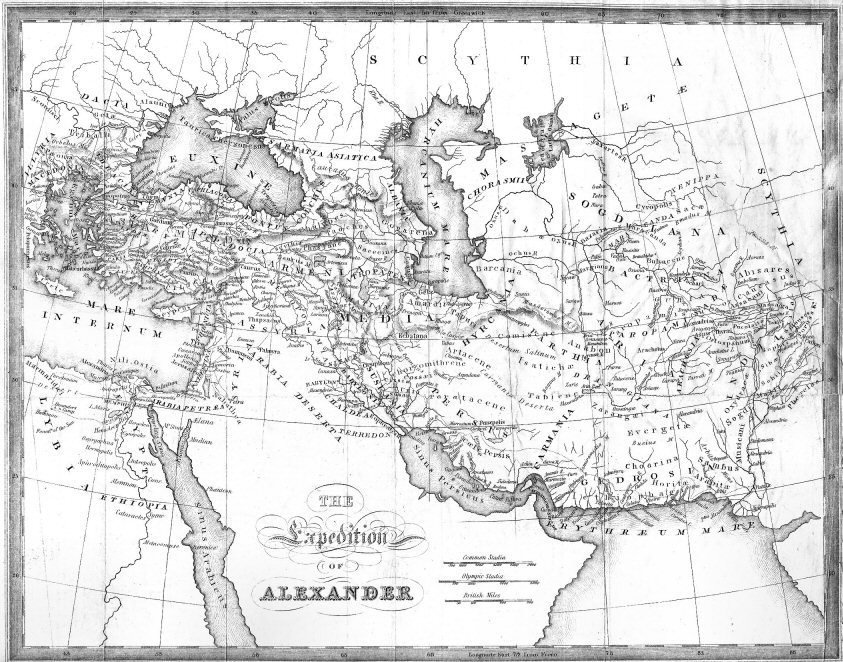
| Map of the Empire of Alexander (1848) | Alexander tames Bucephalus, drawn by Cleveland and engraved by W. Roberts c.1848 | Alexander is taken ill whilst bathing in the River Cydnus at Tarsus, engraved by W. Roberts c.1848 | Plan of Deinocrates to carve Mt Athos into a likeness of Alexander, drawn by Didier and engraved by W. Roberts c.1848 | Alexander leads his army across a pass near Susa, drawn by Cleveland and engraved by W. Roberts c.1848 | Alexander’s mole is attacked by ships during his siege of Tyre, drawn by Didier and engraved by W. Roberts c.1848 |
 |
 |
 |
 |
 |
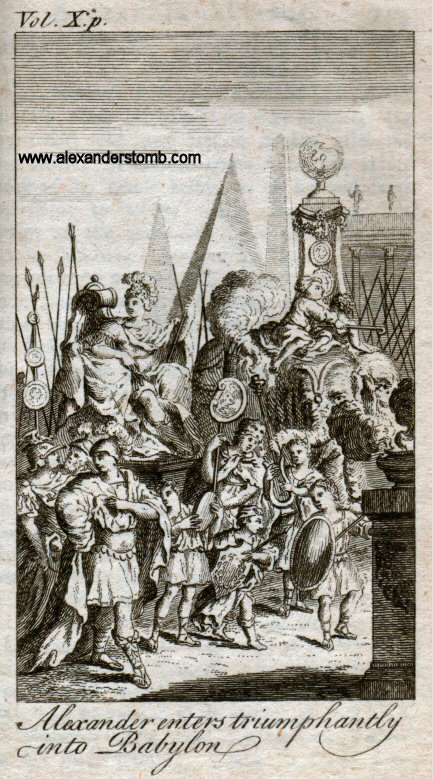 |
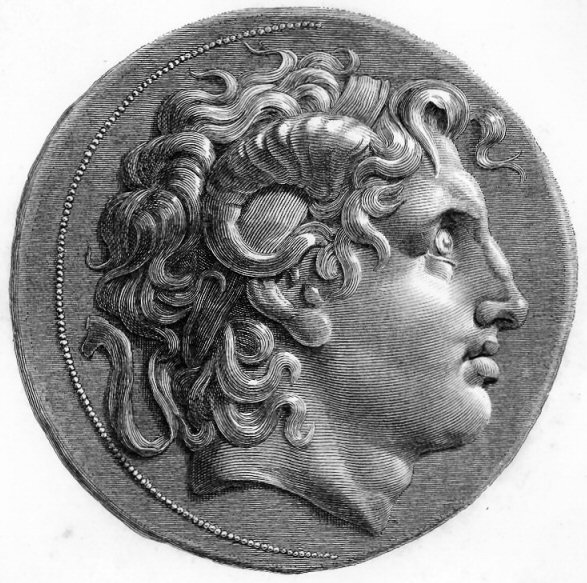
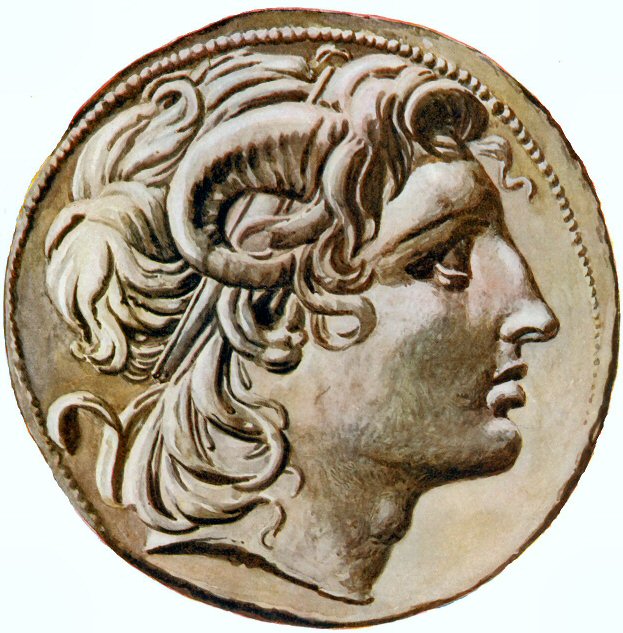
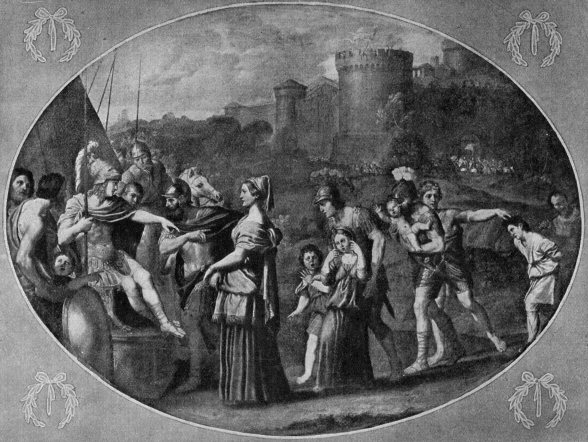
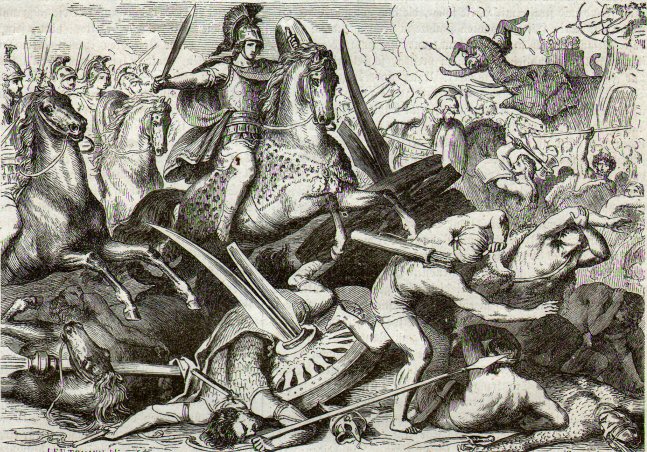
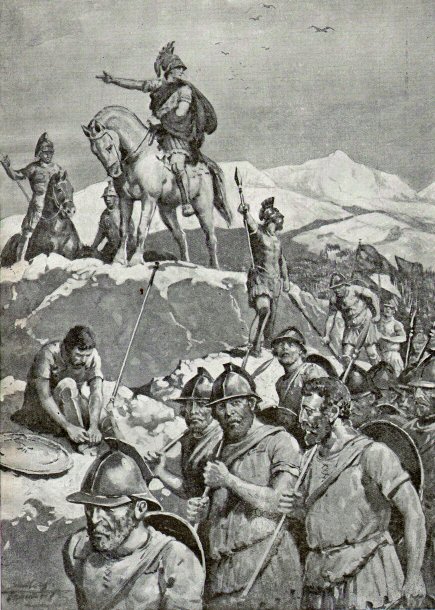
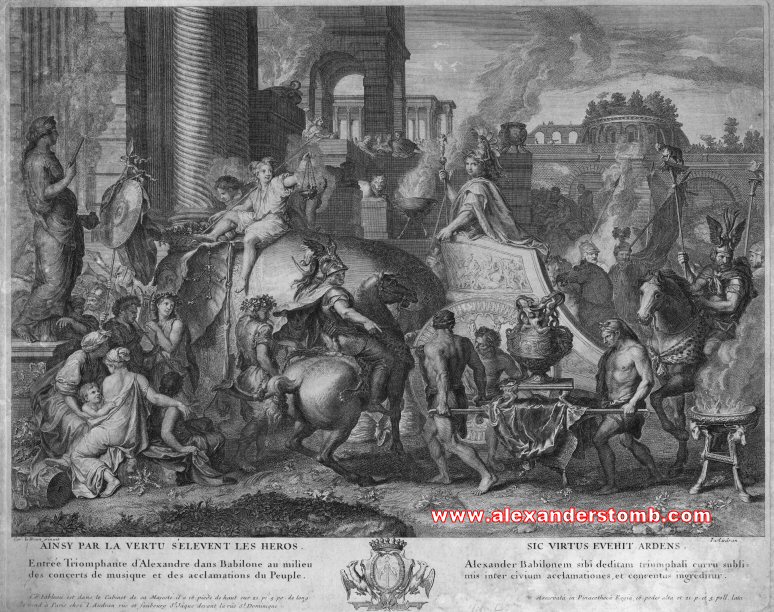
| Engraving made in 1805 by Anker Smith from a drawing by Henry Howard of Alexander deified on a tetradrachm of Lysimachus in the collection of Edward Daniel Clarke (minted c.298-281BC) | Sketch from the early 20th century of Alexander deified on a tetradrachm of Lysimachus (minted c.298-281BC) | Antique reproduction of a painting by Domenico Zampieri (c.1615) depicting the audience of Timoclea before Alexander after the fall of Thebes | Alexander victorious at the battle of Gaugamela drawn by Leutemann (~1880) | “The Onward Sweep of Mighty Alexander” by Dudley Tennant | Engraved image of Alexander’s triumphal entry into Babylon published in a History of Alexander in 1763 |
 |
 |
 |
 |
 |
 |
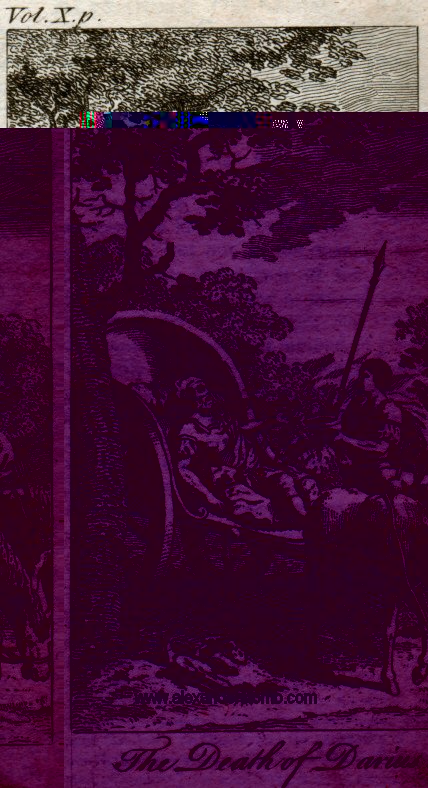
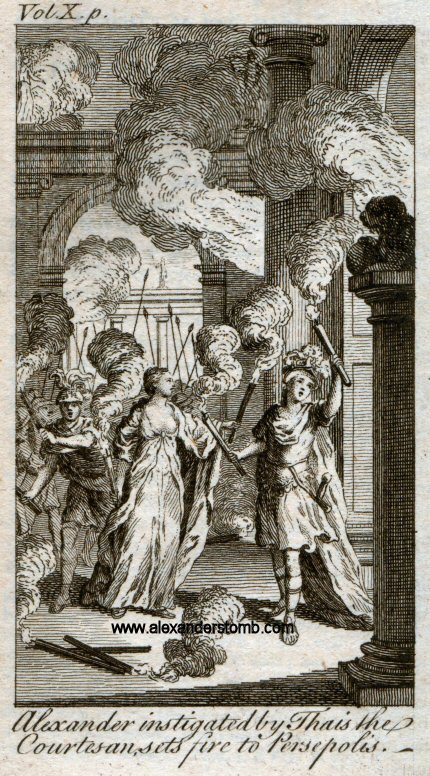
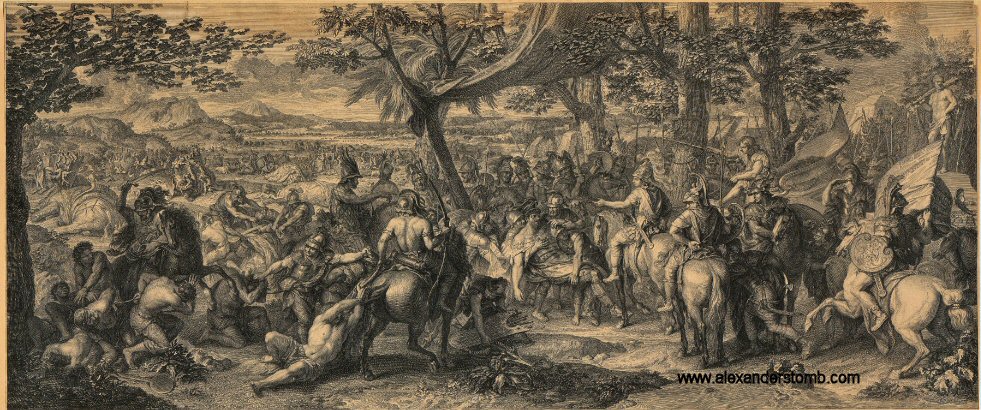
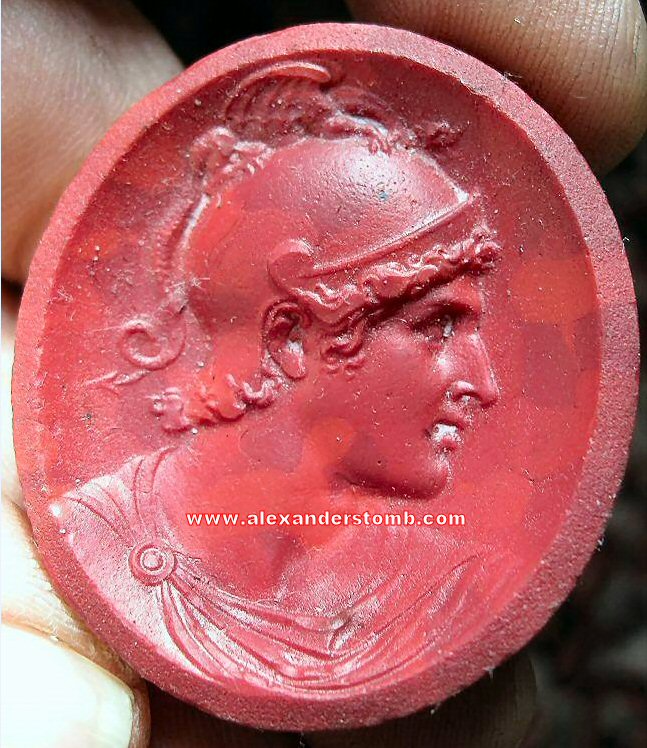
| The death of Darius published in a History of Alexander in 1763 | Alexander incited by Thais sets light to the palace at Persepolis published in a History of Alexander in 1763 | One of the famous Audran engravings of the series of paintings of the deeds of Alexander by Charles Le Brun done for the Sun King (Louis XIV) – this one depicts Porus brought before Alexander and dates to about 1672 | Two tone Cameo Glass image in relief probably representing Alexander the Great - of unknown date (a similar helmet is used in some engravings of Alexander from the 17th century) |
The famous Audran engraving of Alexander’s entry into Babylon from
the painting by Charles Le Brun done for the Sun King (Louis XIV) in
the 1670’s (end of the 17th century) |
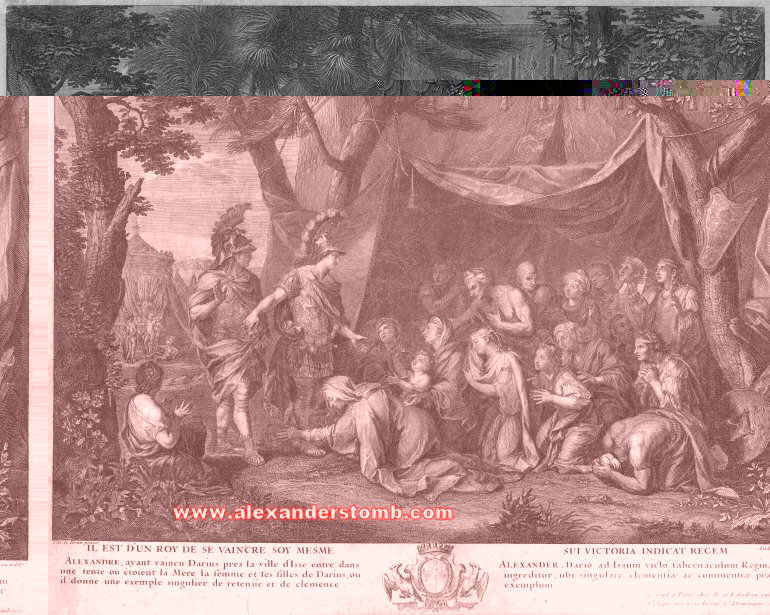
The famous Audran engraving of Alexander & Hephaistion visiting the
Persian Queens after Issus from the painting by Charles Le Brun done
for the Sun King (Louis XIV) in the 1670’s (end of the 17th
century) |
 |
 |
 |
 |
 |
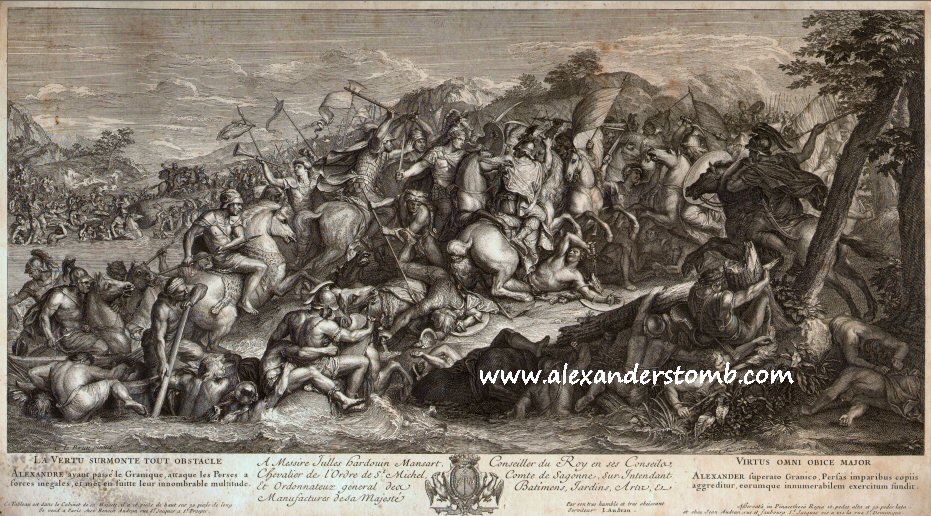 |
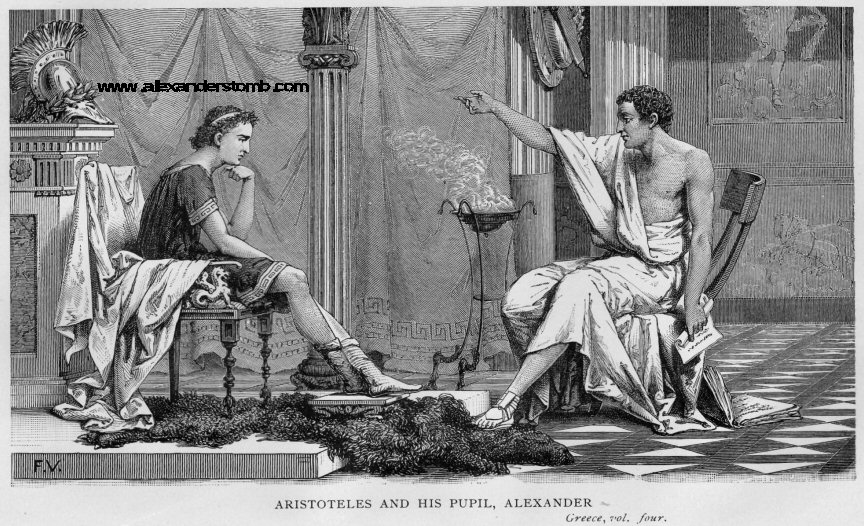
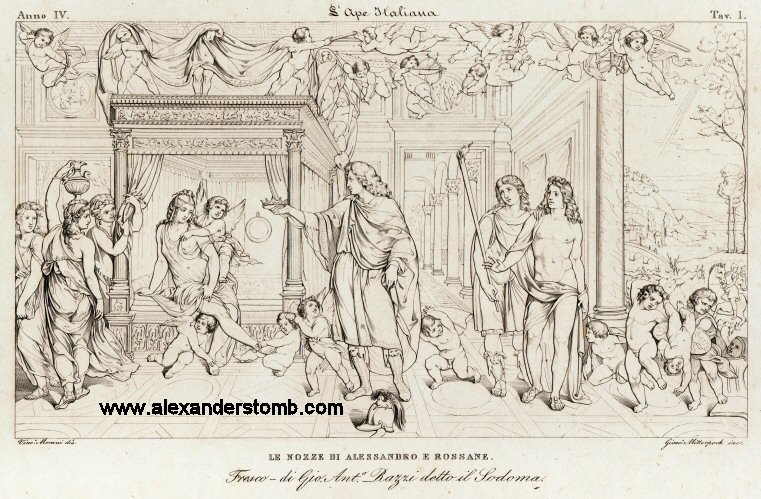
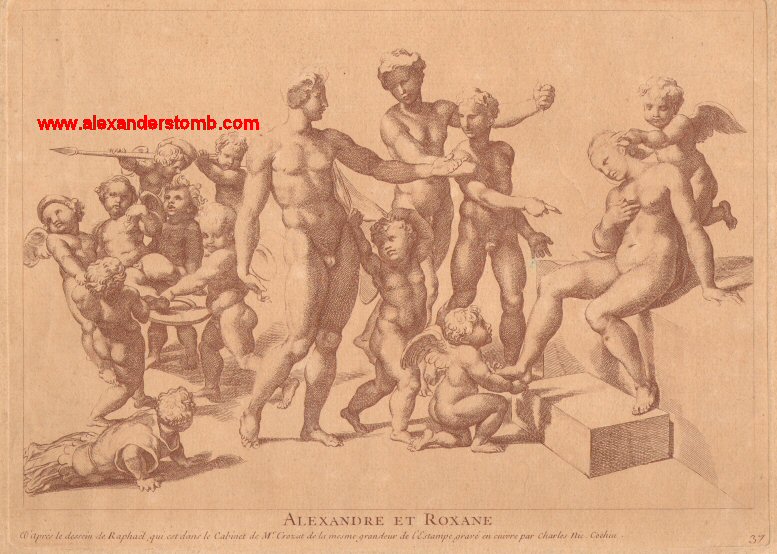
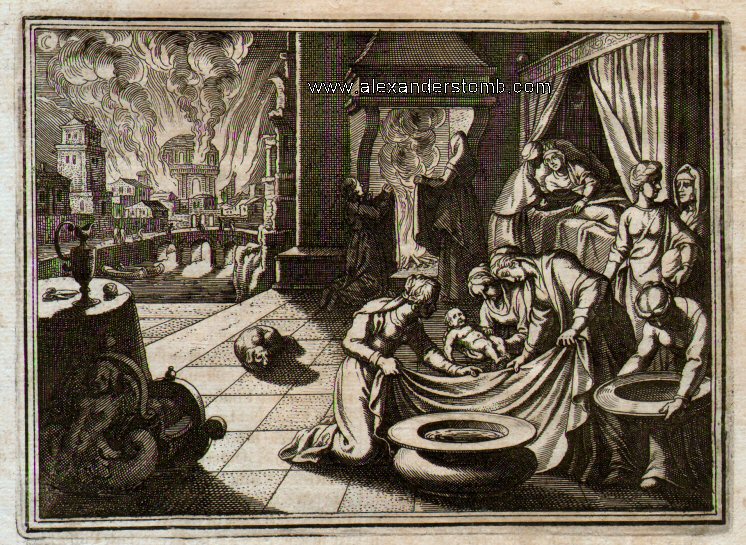
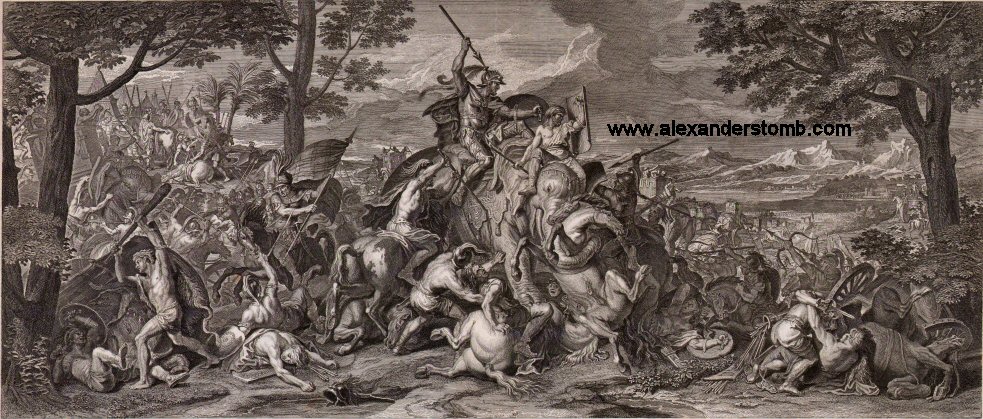
| Aristotle tutors Alexander the Great in an engraving by FV from the late 19th century. | Antique engraving of the fresco of Alexander’s wedding to Roxane by Sodoma in the Villa Farnesina in Rome (~1512) based on a detailed description by Lucian of a Hellenistic painting on this subject | This is an engraving made by Charles Nicolas Cochin in about 1740 based closely upon the drawing of the Wedding of Alexander and Roxane by Raphael, then in the collection of Monsieur Crozat: Raphael based his drawing on a detailed description by Lucian of a Hellenistic painting on this subject | Merian’s version of the birth of Alexander – the Temple of Ephesus burns in the background, though it lay hundreds of miles from Macedon (~1640) | AudranFightingPorus.jpg Porus fighting from his elephant at the Battle of the Hydaspes: one of the series of engravings by the Audrans based on the set of images relating to Alexander produced by Charles le Brun for Louis XIV in the late 17th century (~1700) | Charles le Brun’s painting executed for Louis XIV of Alexander’s battle at the Granicus River rendered as an engraving by Audran circa 1700 – this is the smaller single-sheet version |
 |
 |
 |
 |
||
|
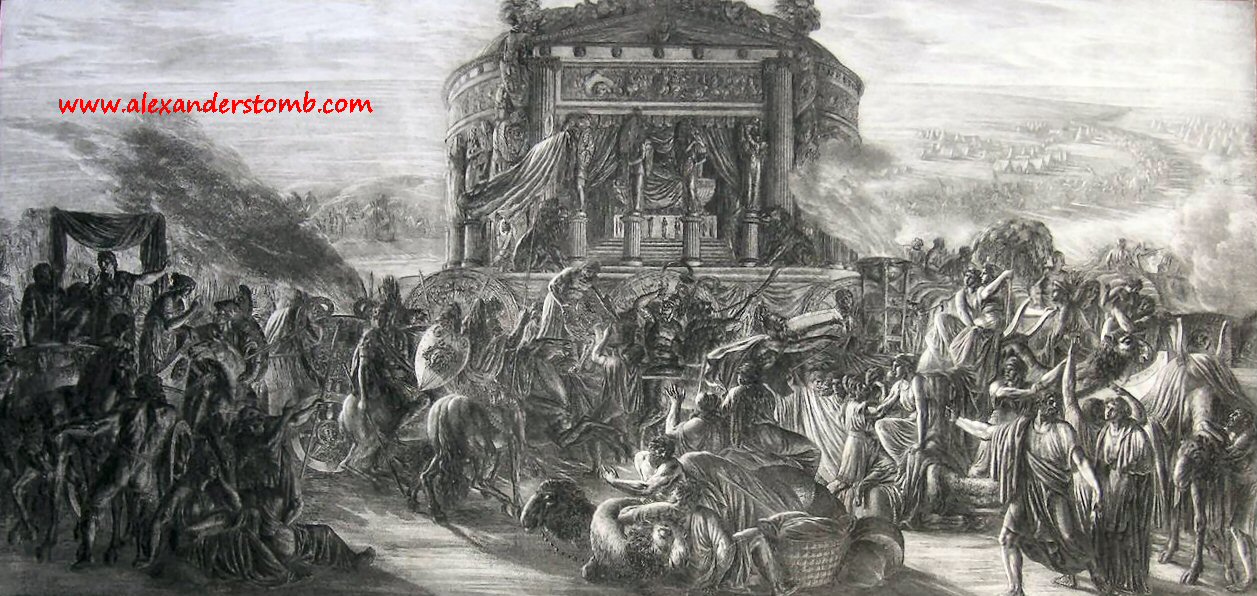
The funeral procession of Alexander the Great depicting the catafalque that transported the corpse from Babylon to Egypt; original etching with aquatinting by Luigi Ademollo (1764 in Milan - 1849 in Florence) after his own painting done in the Villa Bartolini for Luigi Bartolini; Societa Calcografica di Firenze, Florence, 1801. |
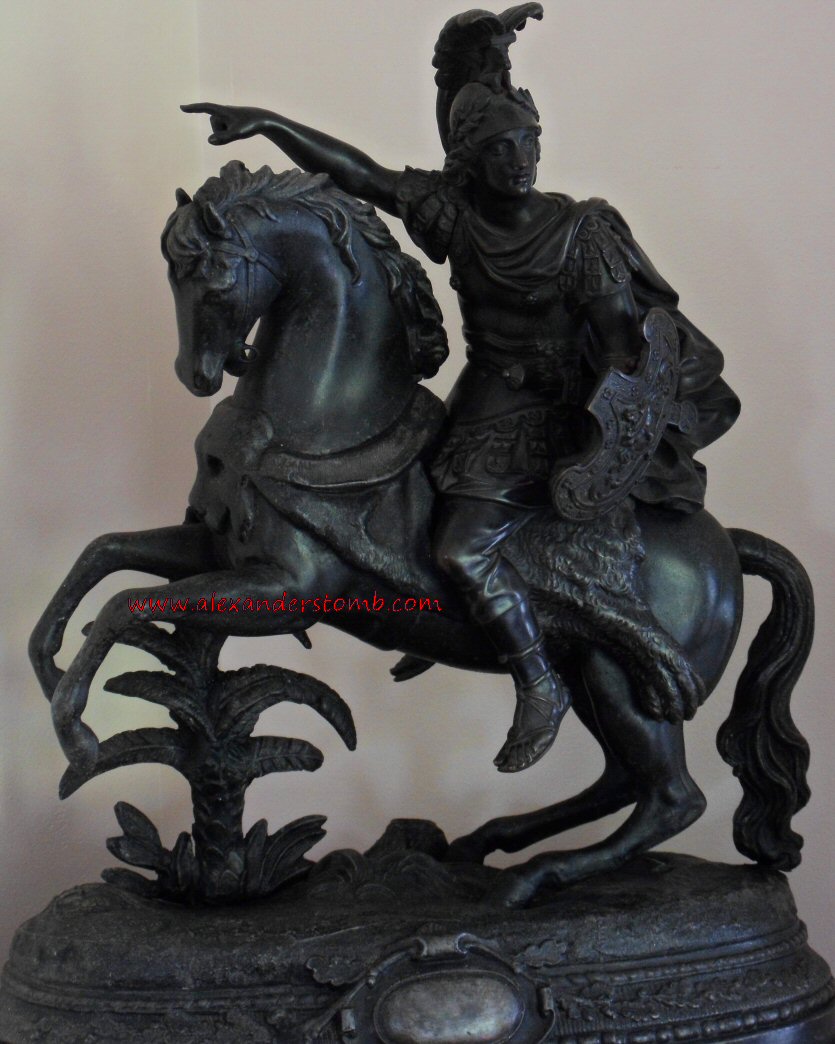
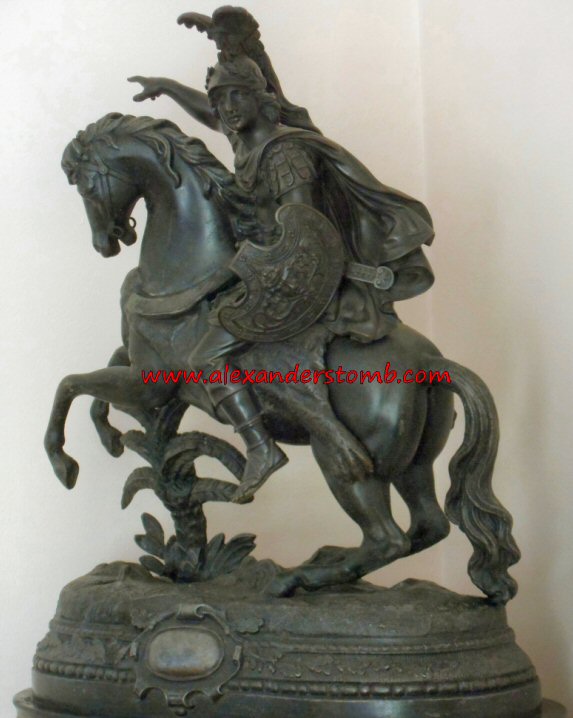
18th or 19th century equestrian statuette of Alexander based on the paintings of the Triumphs of Alexander executed for Louis XIV in the 1670’s by Charles le Brun at Versailles – Alexander is an original bronze cast in 7 pieces, but his mount is a later spelter copy evidently cast from an original – side view | 18th or 19th century equestrian statuette of Alexander based on the paintings of the Triumphs of Alexander executed for Louis XIV in the 1670’s by Charles le Brun at Versailles – Alexander is an original bronze cast in 7 pieces, but his mount is a later spelter copy evidently cast from an original – rear view |
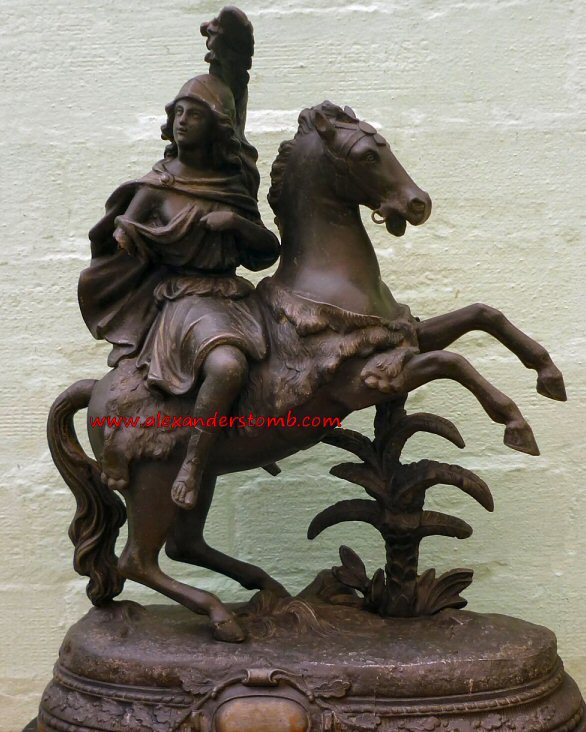
18th or 19th century
equestrian statuette cast in spelter of Thalestris, Queen of the
Amazons, evidently the pair of the equestrian statuette of Alexander
(also on this page) after Charles le Brun at Versailles |