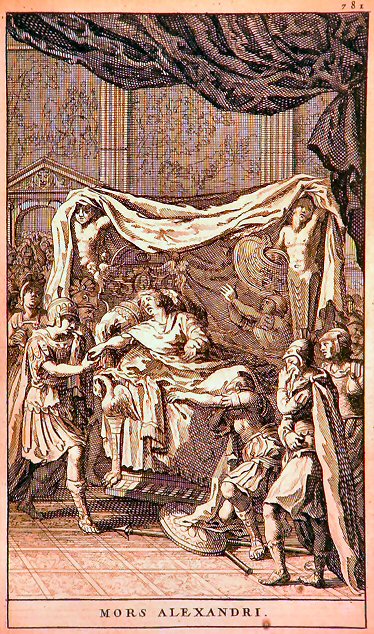
Death of Alexander
New book
The Death of Alexander the Great: A Reconstruction of Cleitarchus
Introduction
Alexander the Great in India: A Reconstruction of Cleitarchus
The most influential account of the career of Alexander the Great was penned by Cleitarchus the son of Deinon, a Greek writing in Alexandria in the decades after Alexander’s death. Most of the surviving ancient texts on Alexander were more or less based upon his work, but every single copy of the original was discarded or destroyed in antiquity. The question is: how far might it be possible to reconstruct it from the secondary writings? In response, this book presents an extensive reconstruction of Cleitarchus’ account of the death of Alexander the Great in the stifling summer heat of Babylon in 323BC. It sweeps through a dramatic series of antecedent episodes culminating in the funeral of Hephaistion. Soon after it climaxes with Alexander’s own expiry, then thunders on into the shock and chaos of the aftermath in a text studded with eulogistic orations and scintillating speeches. It is a must for any with a fascination for the deep political undercurrents that streamed beneath a pivotal event in our history. Title: | The Death of Alexander the Great: A Reconstruction of Cleitarchus | Author: | Andrew Michael Chugg | Pages: | 108 | Illustrations: | 17 Figures & Images | ISBN: | 978-0-9556790-2-5 |
| 
|
Contents
1 | Introduction | 1 |
2 | The Reconstruction of Book 13 of Cleitarchus | 5 |
Is Curtius mainly translating Cleitarchus; Poetical Devices in Cleitarchus; Fragments that Fit the Thirteenth Book; Babylon as the Metropolis; Re-Ordering Curtius on the Mutiny at Opis; The Palace Regiment of the Hypaspists and the Somatophylakes; The Large Lacuna in Curtius; Hephaistion’s Pyre; Hephaistion the Demigod; The Cause of the Death of Alexander; How Did the Leading Men Split after Alexander’s Death; Arrhidaeus the Fool; The First Division of the Satrapies; Last Plans; Antipater & Cassander as Regicides; The Itinerant Corpse |
3 | Book 13: July 324BC – July 323BC & Beyond | 50 |
The Flight of Harpalus; The Exiles Decree; The Mutiny at Opis; Death of Hephaistion; The Cossaeans; Death in Babylon; Aftermath & Entombment |
4 | Organisation And Sources | 84 |
5 | Bibliography | 88 |
6 | Acknowledgements | 94 |
7 | Index | 95 |
Sample images from this book
 |  |  |
| | | |
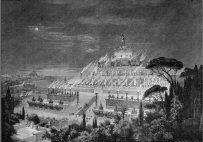
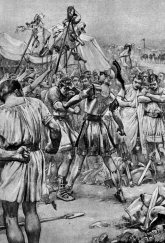
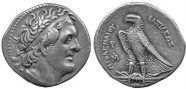
Figure 2.2. Hephaistion’s pyre in Babylon | Figure 13.1. The mutiny at Opis (André Castaigne, 1899) | Figure 13.4. Portrait of Ptolemy on one of his coins |
Sample Pages
AlexDeathCleitarchusSample.pdf
How to Buy
Reviews
| 4.0 out of 5 stars Fascinating evocation of a long lost history of Alexander, 26 May 2010 This review is from: The Death of Alexander the Great: a Reconstruction of Cleitarchus (Paperback) Andrew Michael Chugg has in recent years written a series of excellent and informative books on Alexander, and this latest publication is no exception.
Following on chronologically from his earlier book 'Alexander in India: A Reconstruction of Cleitarchus', 'The Death of Alexander the great' offers a reconstruction of Cleitarchus' 13th and final book covering Alexander’s return from India until his death in Babylon.
We know that Cleitarchus wrote probably the most influential ancient account of Alexander’s life, and although it has not survived, it was used to varying degrees by most of the surviving ancient accounts of Alexander including those by Curtius, Diodorus, Justin and Plutarch. By going through these surviving sources Chugg has cleverly managed to ascertain (delineated with various degrees of probability) how these sources quoted from Cleitarchus’ original account. With this done, the passages have then been melded chronologically to imitate the original book.
The chapters prior to the reconstruction examine in detail events leading up to Alexander’s death, and interpret his final illness - its causes and symptoms so effectively that the reader feels that any mystery surrounding his death has now been definitively explained.
The reconstruction itself is so brilliantly done, that the reader feels they are having the unique privilege of reading a primary ancient source on Alexander. It flows seamlessly and fizzes with all the action, drama and atmosphere that one could wish for and that Cleitarchus intended. Certainly one emerges with a richer interpretation of Alexander after reading this, so coherent does it seem. And this is not just a literary device cleverly employed, for in assembling this book Chugg gives us a deeper understanding of Cleitarchus’ book, its influence and how ancient primary sources were used by other authors in the generations following their creation.
This enjoyable and fascinating book will satisfy scholars and casual readers alike with its mix of analysis of the ancient texts, and its exciting and highly readable reconstruction. Chugg has plans to deliver as complete a reconstruction of the other Cleitarchus books as possible, and I for one really look forward
to the next instalment. |
Other Research on the Death of Alexander by Andrew Chugg
A key ancient source for the manner of the death of Alexander is his own Royal Journal (the Ephemerides), which was compiled by members of his staff.
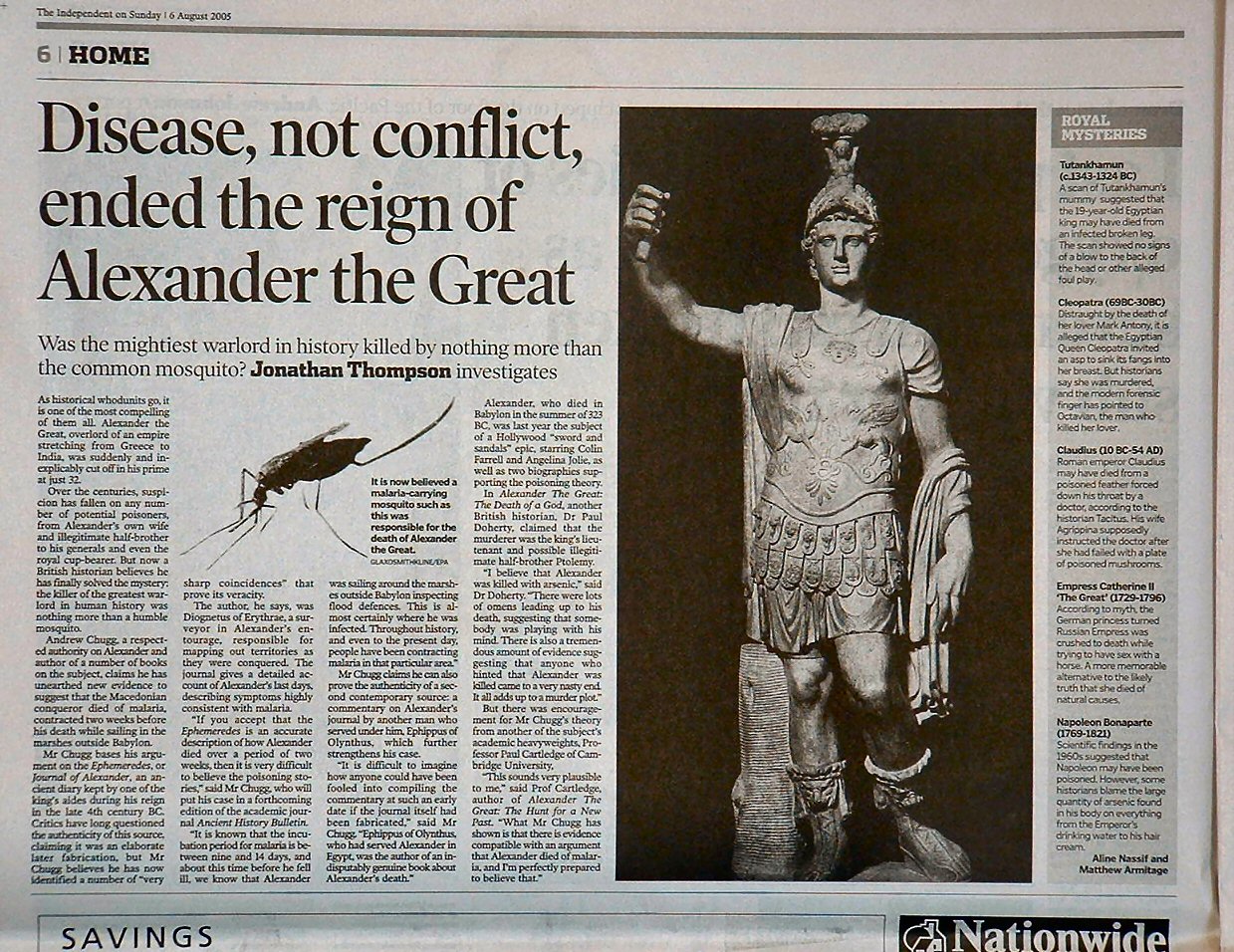
Extracts from this work are cited by Arrian and Plutarch in their descriptions of his demise. The Ephemerides gives a classic account of death through disease (probably malaria), so those who believe that Alexander was poisoned have usually tried to claim that it is a forgery. Andrew has now had a paper accepted for publication in the Ancient History Bulletin, in which he aims to show that the Ephemerides is an authentic document, mainly by revealing the true identities of two mysterious ancient authors. Firstly, the Ephemerides is said to have partly been written by Diodotus of Erythrae.
Andrew suggests that this is probably an error for Diognetus of Erythrae, one of the surveyors (bematists) who worked for Alexander. Secondly, a certain Strattis of Olynthus is said to have written a lost commentary on the Ephemerides. Andrew argues that this is an error for Ephippus of Olynthus, who also wrote a book about the death of Alexander in the generation after his death. It is virtually impossible that the Ephemerides was a forgery, if it was published within living memory of the death of Alexander, because the events it describes were matters of public knowledge and the document would have been denounced, if it had given a false account at such an early date.
Andrew Chugg’s paper on The Journal of Alexander the Great has been published in volume 19.3-4 (2005) of the Ancient History Bulletin: see www.alexanderstomb.com/main/booksandarticles/ahbull/19.3-42005.html for further information http://www.uwinnipeg.ca/faculty/classics/ahbcontributors.html
An article about the new theories has been published in The Independent on Sunday on 7 August 2005.

Andrew has published a more general account of the death of Alexander in the first chapter of his book, The Lost tomb of Alexander the Great.
Andrew was also the author of an article on the death of Alexander published in Minerva in the September 2004 edition.
An outline of the death of Alexander is given in an article by Andrew on this site here.
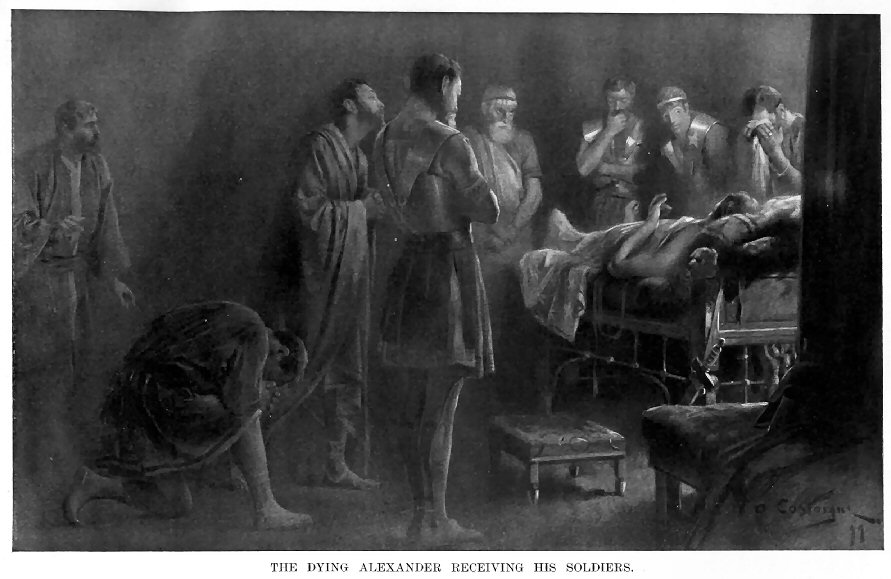
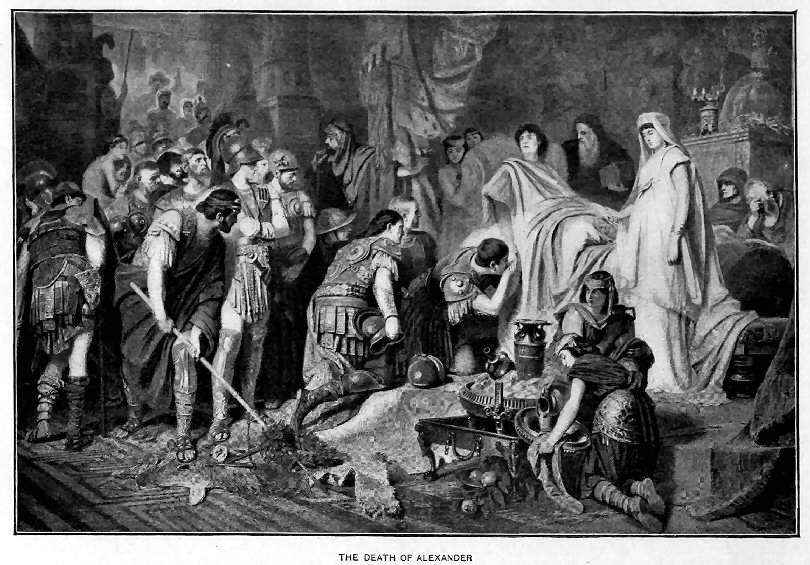
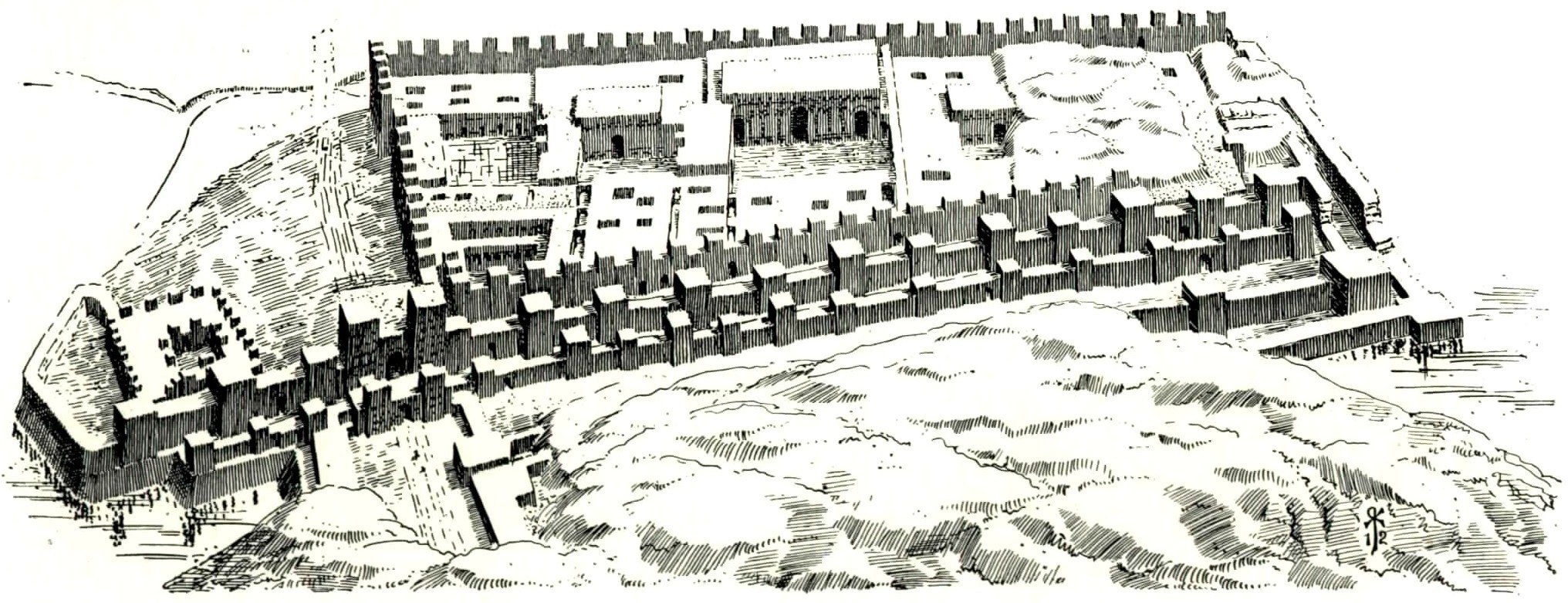
Imaginative reconstructions of the death of Alexander
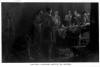 | 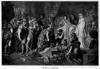 | 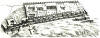 |
| Andre Castaigne 1899 | After Karl von Piloty 1886 | Archaeological reconstruction of the palace in Babylon where Alexander died |
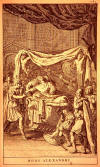 |
| From a 1696 edition of Curtius |
In a recent straw poll on the web Alexander enthusiasts decided that the most interesting question about the king's life is the manner of his death and that the second most burning issue is the location of his tomb and remains, to see poll click here.